Carbon Window Tint vs. Ceramic: The 2026 Guide to Premium Automotive Protection
Is your vehicle's glass acting as a protective shield or a thermal conductor that slowly degrades your fine leather interior? Many owners assume that a dark shade is enough to combat the sun, yet they still find themselves cranking the A/C to the maximum during intense New Jersey summers. When evaluating carbon window tint vs ceramic, the choice isn't merely about aesthetics; it's about whether you want to store heat in your glass or reflect it away from your life. You deserve a solution that preserves your car's resale value and protects your cabin from the harsh effects of UV exposure.
We recognize that your vehicle is a significant investment that requires expert-level care and a meticulous touch. This guide provides the technical clarity you need to choose between these two premium technologies. You'll learn how to achieve a cooler cabin, ensure zero interference with your GPS or toll transponders, and maintain the factory-fresh feel of your upholstery. We will explore the infrared rejection limits of carbon films and the elite heat-shielding properties of ceramic alternatives to ensure your vehicle receives the ultimate standard of protection.
Key Takeaways
- Understand why traditional dyed and metallic films are now considered obsolete for modern vehicle preservation and aesthetic standards.
- Compare carbon window tint vs ceramic technologies to distinguish between simple heat absorption and superior infrared reflection.
- Identify why TSER (Total Solar Energy Rejection) is the definitive metric for maintaining a serene, cool cabin during humid New Jersey summers.
- Discover how elite ceramic films enhance night-driving visibility on the Garden State Parkway while preserving true-color clarity.
- Learn why a meticulous clean-room installation environment is essential for achieving a flawless, contaminant-free finish on luxury glass.
The Evolution of Window Film: Why Standard Tint Isn't Enough
For decades, window tinting was primarily a cosmetic choice. Owners wanted a sleek, "blacked-out" look to enhance their vehicle's profile and provide a sense of privacy. However, as automotive engineering has advanced, so too has the technology behind window film. Today, the conversation has shifted from simple aesthetics to comprehensive preservation. Choosing between carbon window tint vs ceramic is now a critical decision for any owner who views their vehicle as a lasting investment rather than just a mode of transportation.
The Invisible Threat to Your Luxury Interior
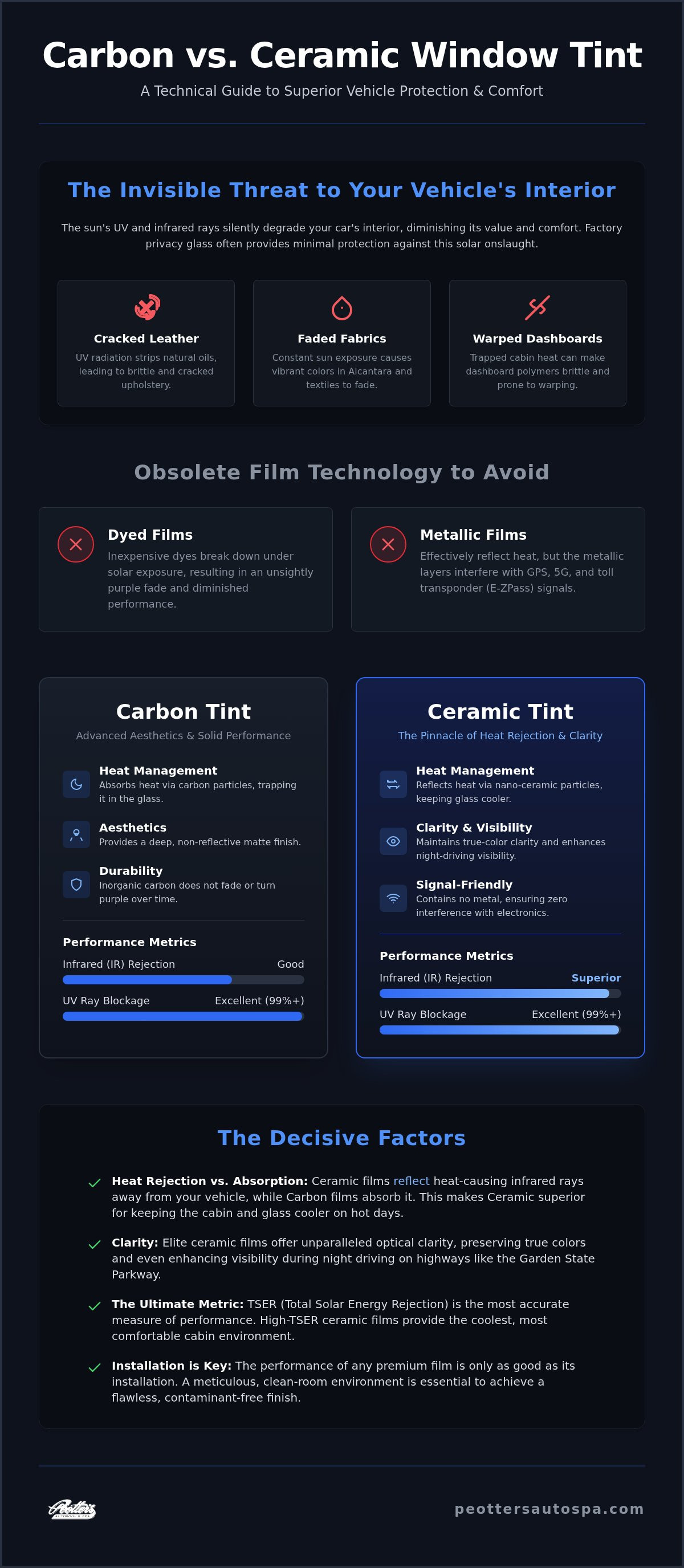
The sun's rays are relentless, especially during the peak of a New Jersey summer. Over time, UV radiation acts as a silent catalyst for degradation. High-end leather loses its natural oils and begins to crack, while Alcantara fades under constant exposure. Dashboard polymers, which are engineered for durability, can become brittle and prone to warping when subjected to trapped cabin heat. Many owners mistakenly believe that factory-installed privacy glass provides adequate protection. While this glass is darkened for privacy, it often lacks the specialized heat-rejection properties found in premium aftermarket films. Professional-grade protection acts as a guardian for your cabin, ensuring that the showroom quality of your interior remains intact for years. This meticulous preservation isn't just about comfort; it directly impacts your vehicle's resale value by preventing the visible signs of solar aging.
Moving Beyond Metallic and Dyed Films
Traditional window films often rely on inexpensive dyes or metallic layers, but these materials come with significant drawbacks that the modern enthusiast can't ignore. We've all seen the unsightly purple fade on older vehicles; this is the result of cheap dyes breaking down and losing their structural integrity under intense solar exposure. Metallic films present a different challenge. While they reflect heat effectively, they frequently interfere with modern digital infrastructure. In an era of 5G connectivity, GPS navigation, and toll transponders like E-ZPass, metallic films create a literal barrier to your vehicle's communication. The industry has moved into the nano-particle era to solve these issues. By using microscopic particles, modern films offer superior clarity without the risk of signal disruption or discoloration. This technological leap is what defines the current debate over carbon window tint vs ceramic, as both offer high-performance alternatives to the obsolete films of the past. These advanced materials ensure your car stays connected and your vision remains crystal clear, even during challenging night-driving conditions.
Carbon vs. Ceramic: The Science of Nano-Particle Protection
The term "nano" is often used as a marketing buzzword, but in the context of elite automotive protection, it represents a genuine revolution in material science. By manipulating matter at the molecular level, manufacturers can embed microscopic particles within the film layers to block specific wavelengths of solar energy. This advanced nanoparticle technology for energy efficiency allows for high levels of heat rejection without requiring the heavy, dark shades associated with older technologies. When comparing carbon window tint vs ceramic, the primary distinction lies in how these particles interact with solar energy: one traps it, while the other reflects it away.
How Carbon Particles Manage Heat
Carbon films utilize microscopic carbon particles to manage solar energy through a process of absorption. Instead of allowing heat to pass into your cabin, the carbon particles trap the energy within the film itself. This creates a highly effective thermal barrier, though it leads to a phenomenon known as "heat soak." On an exceptionally hot day, the glass itself will eventually become warm as the film reaches its thermal capacity. Despite this, carbon remains a favorite for enthusiasts who appreciate its distinct aesthetic. It provides a deep, non-reflective matte finish that complements the lines of modern luxury vehicles perfectly. Because carbon is an inorganic material, it doesn't contain the dyes that lead to the "purple fade" seen in entry-level products, ensuring your vehicle maintains its sophisticated appearance over the long term.
The Ceramic Advantage: Infrared Reflection
Ceramic technology represents the pinnacle of current window film engineering. Rather than absorbing heat, nano-ceramic particles are designed to act as a microscopic mirror for infrared (IR) radiation. Since infrared rays are the primary source of the burning sensation you feel on your skin during a drive, reflecting them is the most efficient way to maintain a comfortable environment. This reflective property means the glass stays significantly cooler compared to carbon alternatives, reducing the thermal stress on your windows. Ceramic films offer a "cool-to-the-touch" experience even when your car has been parked in direct sunlight for hours. This efficiency allows for remarkable heat rejection even in lighter shades, which is ideal for owners who want protection without significantly altering the factory look of their glass. If you're looking to achieve the perfect balance of clarity and climate control, you might consider how a professional window tint installation can transform your daily driving experience.
The relationship between particle density and visual light transmission (VLT) is also more refined in ceramic options. Because the particles are so efficient at blocking IR and UV rays, the film can remain thinner and more transparent. This leads to superior night-time visibility and "true-color" perception, ensuring that your view of the road remains vivid and undistorted. Whether you choose the deep matte look of carbon or the high-performance reflection of ceramic, both materials offer a level of durability and signal-friendly performance that traditional films simply cannot match.
Head-to-Head Comparison: Heat Rejection, Clarity, and Durability
Selecting the ideal film for your vehicle requires moving beyond simple darkness percentages. To truly understand the performance of carbon window tint vs ceramic, we must look at how these materials perform under the stress of real-world driving. While both represent a significant upgrade over standard dyed films, their impact on your daily comfort and your vehicle's electronic ecosystem differs in subtle yet important ways. We focus on the metrics that matter most to the discerning owner: thermal efficiency, visual precision, and long-term resilience.
Heat Rejection and TSER Explained
Many manufacturers highlight Infrared (IR) rejection because the numbers look impressive, often exceeding 90 percent. However, IR is only one part of the solar spectrum. Total Solar Energy Rejection (TSER) is the definitive metric for performance because it measures the combined rejection of UV rays, visible light, and infrared radiation. Ceramic films typically offer the highest TSER ratings available, often reaching between 50 and 70 percent depending on the shade. This efficiency mimics the principles seen in advanced thermochromic technology designed for high-efficiency buildings. By reflecting more energy away from the glass, ceramic films significantly reduce the load on your vehicle's climate control system. This leads to a quieter cabin experience, as your A/C doesn't need to run at maximum velocity. For electric vehicle owners, this thermal management translates directly into improved battery range by minimizing the power consumed by the HVAC system.
Signal Clarity in a Connected World
Modern luxury vehicles are essentially mobile computers, relying on a constant stream of data to function. From 5G cellular connectivity and GPS navigation to Bluetooth and satellite radio, your glass must remain "transparent" to digital signals. One of the greatest advantages of the carbon window tint vs ceramic debate is that both materials are non-conductive and non-metallic. This ensures your mobile devices maintain peak signal strength without the dropped calls or slow data speeds caused by older metallic films. Ceramic technology is particularly critical for vehicles equipped with advanced driver-assistance systems (ADAS). These systems often use sensors located near the glass that require absolute clarity to function safely. Furthermore, we ensure that your installation allows for the seamless operation of NJ E-ZPass transponders and other toll-collection devices, preventing the frustration of failed scans at the toll plaza.
Visual clarity is where ceramic truly pulls ahead during low-light conditions. While carbon provides a beautiful matte aesthetic, ceramic films are engineered to provide "true-color" visibility. This means you won't experience the slight "haze" or color distortion that can occur with lesser films. At night, this precision is vital for safety, providing a crisp view of the road that feels as natural as un-tinted glass. When paired with a professional installation, these premium films are guaranteed against bubbling, peeling, and delamination, ensuring your investment remains flawless for the life of the vehicle.
Selecting the Right Film for the New Jersey Climate
Living in New Jersey presents a unique set of environmental challenges for automotive preservation. From the dense, high-speed traffic of the Garden State Parkway to the intense humidity that settles over Springfield in July, your vehicle's glass is your first line of defense. Choosing between carbon window tint vs ceramic is often a matter of matching the film's technology to these local conditions. While a weekend exotic might prioritize a specific aesthetic, a daily driver commuting through Union County requires a film that balances heat rejection with absolute visual clarity.
Dealing with Humidity and Summer Heat
New Jersey's humid summers create a distinct thermal challenge. High humidity levels amplify the "greenhouse effect" inside your vehicle, as moisture in the air traps heat more effectively than dry air. When your car sits in a parking lot, this combination can lead to cabin temperatures that risk damaging fine interior materials. While carbon films absorb this energy, ceramic films are designed to reflect it away before it ever penetrates the glass. This reflective efficiency provides a significantly faster "cool-down" period once you start your journey. By selecting a film with the proper Visible Light Transmission (VLT), you can maximize this thermal defense while remaining compliant with legal window tint NJ regulations. This balance ensures your cabin remains a serene sanctuary regardless of the temperature outside.
Visual Clarity for Night Driving in Union County
Safety is paramount when navigating the complex interchanges of northern New Jersey, especially after the sun sets. Lower-quality films can sometimes exhibit a "low-angle haze" when hit by direct light, which can be distracting during a night-time commute. Premium ceramic films are engineered to eliminate this distortion, providing a high-definition view of the road. This clarity is particularly beneficial for reducing the piercing glare of modern LED headlights from oncoming traffic. During heavy rainstorms, which are frequent in our region, this superior visibility allows you to track lane markings and other vehicles with greater precision. Whether you are driving a high-performance sports car or a luxury SUV, the investment in elite film technology pays dividends in both comfort and confidence. If you are ready to enhance your vehicle's resilience, you can book your premium window tinting service with our specialist team today.
Ultimately, your choice should reflect how you use your vehicle. A daily driver benefits most from the high-performance heat rejection of ceramic, which eases the strain on your A/C and preserves the cabin's longevity. For those with a collection of classic or exotic cars, the deep matte look of carbon may provide the perfect period-correct or stealthy aesthetic. Our role as meticulous master craftsmen is to help you navigate these choices, ensuring the final result meets the exacting standards your vehicle deserves.
The Peotter’s Auto Spa Standard: Precision Installation in Springfield
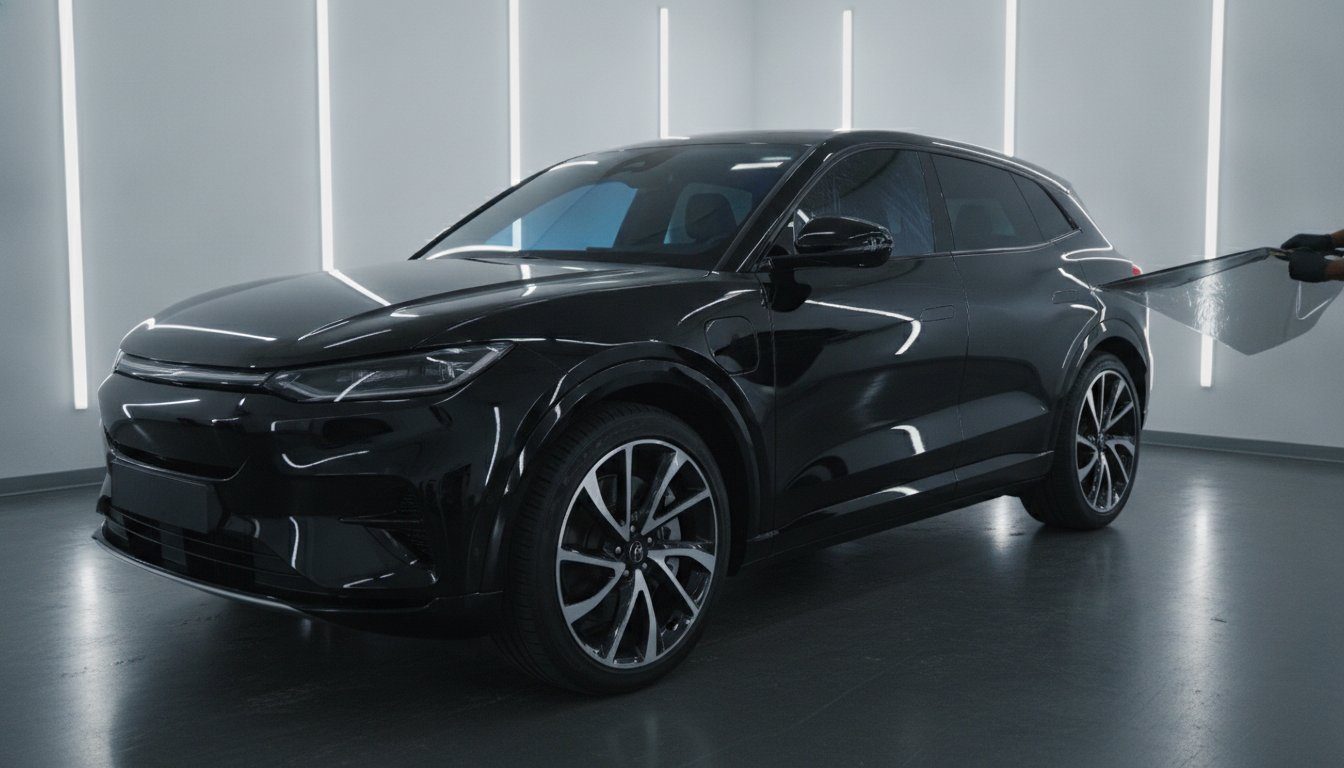
Technology is only as effective as the hand that applies it. Even the most advanced film will fail to provide the protection you expect if it is marred by dust, creases, or visible gaps. At Peotter’s Auto Spa, we treat every installation as an act of meticulous craftsmanship. Our Springfield facility utilizes a clean-room approach to minimize airborne contaminants, ensuring a pristine finish that meets the expectations of the most discerning collector. Whether you are finalizing your decision on carbon window tint vs ceramic, the quality of the bond between the film and your glass is where our expertise truly shines.
The Meticulous Installation Process
We utilize precision computer-cutting technology to ensure a perfect fit for every window. This method eliminates the need for hand-cutting on the vehicle, which protects your glass and delicate trim from accidental blade damage. Our technicians focus on edge-to-edge fitment, a technique that eliminates the unsightly light gaps often found in high-volume shops. Every vehicle undergoes a multi-stage inspection process to verify a flawless, bubble-free result before it is returned to your care. This rigorous standard is why owners of luxury and exotic models trust us as the guardians of their vehicle's value.
Synergy: Tint, PPF, and Ceramic Coatings
Window tint is a vital component of what we call Total Vehicle Preservation. While the tint protects the interior from UV degradation, a professional ceramic coating guards the exterior paint against environmental fallout and oxidation. For those who demand the highest level of resilience against New Jersey's road conditions, we recommend a high-quality paint protection film to shield the front-facing surfaces from stone chips and debris. This holistic approach ensures your investment is protected from every angle, maintaining its showroom perfection and resale value.
Choosing between carbon window tint vs ceramic is the first step toward a more comfortable and protected driving experience. We invite you to visit our Springfield boutique to see the difference that a specialist's touch makes. Our team is dedicated to providing a white-glove service experience, acting as trusted advisors who are as invested in your vehicle's appearance as you are. By combining elite film technology with our uncompromising installation standards, we deliver a result that is as durable as it is beautiful.
Secure Your Vehicle's Future with Elite Protection
Your vehicle is more than a machine; it's a significant investment that deserves a higher standard of preservation. We've explored how the choice between carbon window tint vs ceramic impacts everything from your cabin's temperature to your digital connectivity. While carbon offers a timeless matte aesthetic, ceramic technology provides the ultimate shield against New Jersey's infrared heat. Both materials represent a leap forward in automotive protection, ensuring your interior remains in showroom condition for years to come.
At Peotter’s Auto Spa, we combine this elite technology with a level of care only a family-owned specialist can provide. Since 1994, our team has delivered luxury concierge-level service to owners who refuse to compromise on quality. We utilize precision computer-cut patterns to guarantee a perfect fit for every exotic and luxury model that enters our Springfield facility. This meticulous approach eliminates the risks associated with hand-cutting and ensures a flawless, edge-to-edge finish.
It's time to transform your daily commute into a serene, temperature-controlled experience. Schedule Your Premium Tint Consultation in Springfield and let our master craftsmen protect what you value most. Your journey toward total vehicle preservation starts with a single, meticulous detail.
Frequently Asked Questions
Is ceramic window tint worth the extra cost compared to carbon?
Ceramic window tint is a superior investment for owners who want maximum heat rejection without choosing a dark shade. While both premium options are excellent, the core difference in the carbon window tint vs ceramic debate is the method of thermal management. Ceramic reflects infrared energy away from the glass, whereas carbon absorbs it. This leads to a cooler cabin and reduced reliance on your air conditioning during peak New Jersey summers.
Does carbon window tint fade over time like dyed films?
High-quality carbon film is engineered with inorganic carbon particles that are naturally resistant to UV degradation. Unlike entry-level dyed films that oxidize and turn purple over time, carbon maintains its deep, matte black appearance for the life of the vehicle. This durability ensures that your car's aesthetic remains as sharp as the day the film was installed, preserving both its visual appeal and its long-term resale value.
Will ceramic tint interfere with my car's GPS or cell phone signal?
No, ceramic film is completely non-metallic and won't interfere with your vehicle's digital ecosystem. It is specifically designed to be "signal friendly" for 5G cellular data, GPS navigation, and Bluetooth connectivity. This is a critical advantage over older metallic films that can block signals. You can drive through Union County with confidence that your phone, satellite radio, and E-ZPass transponders will function flawlessly without any drop in performance.
How long does it take to install professional window tint at Peotter's?
A professional installation at our Springfield facility typically requires between three to five hours depending on the number of windows and the complexity of the vehicle's glass. We prioritize a meticulous "white-glove" process over speed. This time allows our technicians to perform a deep glass cleaning, execute precision computer-cuts, and conduct a multi-stage inspection to ensure a bubble-free finish that meets our uncompromising standards for excellence.
What is the legal window tint limit in New Jersey for 2026?
In New Jersey, current regulations prohibit any aftermarket tint on the windshield and front side windows unless you have a documented medical exemption. However, you're permitted to apply any level of darkness to the rear side windows and the back windshield. We help our clients navigate these rules to find a balance between high-performance protection and legal compliance, ensuring your vehicle remains both protected and road-legal.
Can ceramic window tint be applied over factory privacy glass?
Yes, applying ceramic film over factory privacy glass is a highly recommended upgrade for total vehicle preservation. Factory privacy glass is primarily designed for aesthetics and privacy; it often lacks the advanced UV and infrared rejection properties of premium films. Adding a layer of ceramic tint provides the thermal protection and interior preservation that factory glass misses, ensuring your cabin stays cool while protecting your leather from solar damage.
How do I maintain my new window tint to ensure it lasts?
Maintaining your new film is simple if you follow a few professional guidelines. You should wait at least three to five days before rolling down your windows to allow the adhesive to cure completely. When cleaning, always use a soft microfiber towel and a dedicated window cleaner that's free of ammonia. Ammonia can degrade the film's top coat over time, so sticking to mild soap and water or tint-safe cleaners is essential for longevity.
Does ceramic tint provide better night visibility than carbon tint?
Ceramic tint offers noticeably better night-time clarity compared to many other film types. Because ceramic particles are incredibly efficient at blocking heat, the film can achieve high performance even in lighter shades. This leads to superior "true-color" visibility and reduces the slight haze or distortion that can sometimes occur with carbon films. For drivers frequently navigating the Garden State Parkway at night, this visual precision is a vital safety benefit.