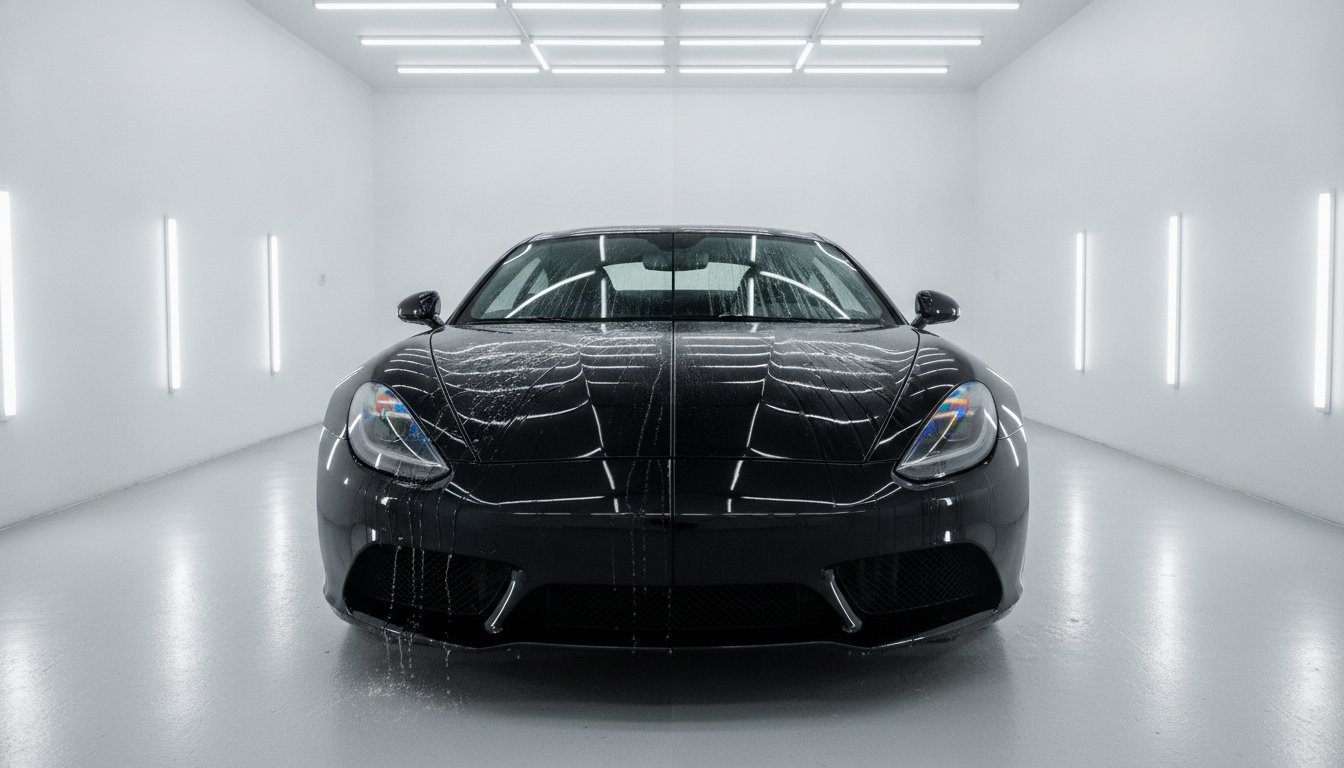
Ceramic Coating vs. Wax: Which Is Better for New Jersey Weather?
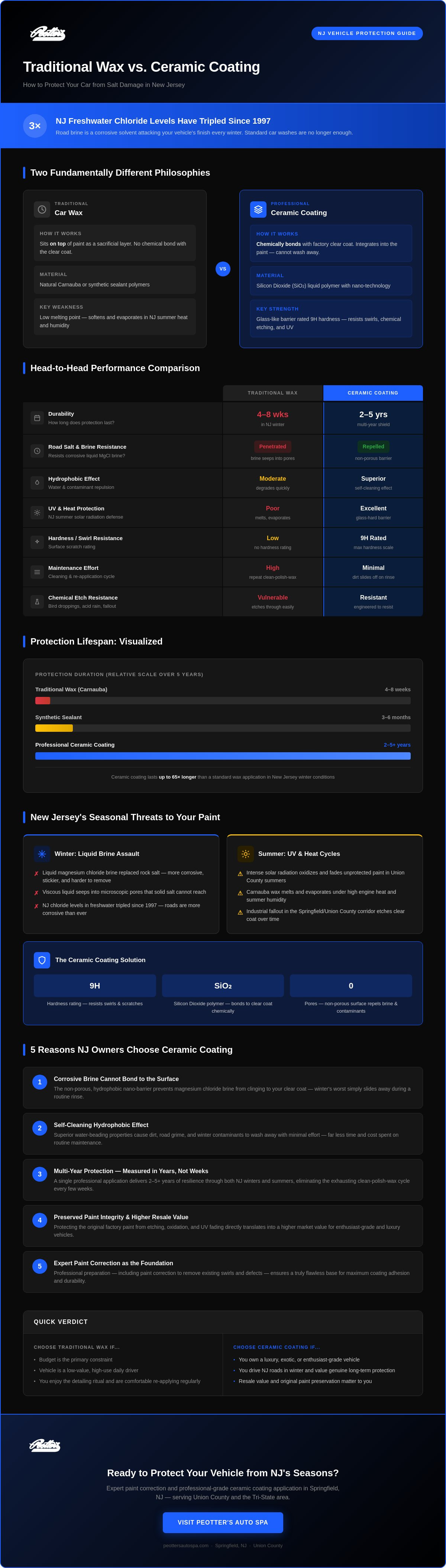
Did you know that chloride levels in New Jersey's freshwater have tripled since 1997? This staggering increase reflects the sheer volume of corrosive brine used on our roads, which acts as a relentless solvent against your vehicle's delicate finish. If you are searching for how to protect car from salt damage NJ, you have likely realized that a standard car wash is no longer enough to preserve your paint's integrity. You view your vehicle as a significant investment, and it's exhausting to fight a losing battle against winter etching and intense summer UV rays.
Discover why professional surface protection is the only way to safeguard your vehicle against New Jersey’s volatile seasonal extremes and corrosive road salt. We will provide a clear comparison between the temporary cosmetic appeal of traditional wax and the structural resilience of ceramic coatings. This guide explores how the right choice ensures long-term paint preservation, effortless winter cleaning, and a finish that maintains the high resale value your vehicle deserves. We invite you to explore a more meticulous standard of automotive care that moves beyond simple maintenance into the realm of true preservation.
Key Takeaways
- Contrast the fleeting protection of traditional wax with the resilient, multi-year shield of a professional ceramic coating designed for the tri-state's volatile climate.
- Discover how to protect car from salt damage NJ using advanced liquid polymers that chemically bond to your paint and resist the corrosive effects of winter road brine.
- Experience the "self-cleaning" benefits of superior hydrophobic properties, which allow dirt and winter contaminants to wash away with minimal effort.
- Evaluate the long-term financial advantages of professional protection, including preserved paint integrity and enhanced market value for enthusiast-grade vehicles.
- Recognize why expert paint correction and professional-grade preparation are the essential foundations for a truly flawless and durable protective finish.
Understanding the Basics: Traditional Wax vs. Ceramic Coating
For discerning vehicle owners in Springfield and surrounding Union County, maintaining a pristine finish is a matter of both pride and preservation. When considering how to protect car from salt damage NJ, the conversation typically centers on two distinct philosophies: the temporary shine of traditional wax and the permanent defense of a ceramic coating. While both aim to shield your paint, their molecular structures and performance capabilities exist on entirely different levels of craftsmanship. You view your car as a significant investment; choosing the right protection is the first step in safeguarding that value.
Traditional car wax acts as a sacrificial layer that simply rests on top of the paint's surface. It provides a warm glow and a physical barrier against the elements, but it remains a fragile guest. In contrast, a professional ceramic coating is a liquid polymer composed of Silicon Dioxide (SiO2) that initiates a sophisticated chemical bond with your factory clear coat. This process effectively integrates the protection into the vehicle’s finish, creating a semi-permanent shield that does not wash away or degrade under the pressure of New Jersey’s seasonal extremes.
The Anatomy of Automotive Wax
In the discipline of high-end Auto detailing, wax is often categorized into natural Carnauba or synthetic sealants. While Carnauba offers an unmatched organic depth, it possesses a low melting point that is ill-suited for the Tri-State area. Intense engine heat and the sweltering humidity of a New Jersey July can cause these natural oils to soften, evaporate, and lose their protective integrity in just a few weeks. Maintaining this finish requires a constant cycle of cleaning, polishing, and re-application, a commitment that many modern professionals find increasingly unsustainable when looking for how to protect car from salt damage NJ effectively.
The Science of Ceramic Nano-Technology
Ceramic coatings represent the pinnacle of modern surface engineering. By utilizing nano-technology, these coatings fill the microscopic pores of your clear coat to create a glass-like barrier that is incredibly hard and resilient. This durability is often measured on the 9H hardness scale, a standard that denotes a high level of resistance against light surface swirls, chemical etching, and environmental fallout. While a premium wax may fail after two months of road salt exposure, a professional-grade coating is engineered for longevity. It is measured in years rather than weeks, ensuring your vehicle remains flawless, protected, and preserved through every winter storm and summer heatwave.
The NJ Weather Stress Test: Fighting Road Salt and Brine
New Jersey drivers face a unique atmospheric gauntlet that demands more than a superficial shine. From the corrosive chemical baths of the Garden State Parkway to the high UV exposure of a shore-bound summer, your vehicle's finish is under constant assault. Understanding how to protect car from salt damage NJ requires a deep dive into the specific environmental stressors found in our region. Standard retail waxes simply cannot withstand the chemical aggression of modern road treatments or the industrial fallout common in the Springfield and Union County corridors. True preservation requires a defense that is as resilient as the climate is volatile.
Winter: The Chemical Aggression of Liquid Brine
The transition from traditional rock salt to liquid magnesium chloride brine has fundamentally changed the landscape of automotive preservation. This liquid solution is designed to lower the freezing point of water more effectively, but it also creates a sticky, corrosive film that is notoriously difficult to remove. Liquid brine penetrates wax layers more aggressively than traditional rock salt because its viscous nature allows it to cling to surfaces and seep into microscopic imperfections where solids cannot reach. A professional ceramic coating creates a non-porous, hydrophobic barrier that prevents these chemicals from bonding to your clear coat, ensuring that winter's worst simply slides away during a routine rinse.
Summer: UV Protection and Heat Cycles in Union County
As the winter slush clears, your vehicle faces a new adversary in the form of intense solar radiation. New Jersey’s summer UV index can be surprisingly high, leading to the rapid oxidation of the clear coat that results in a cloudy, lifeless appearance. Additionally, the metal panels of your vehicle undergo significant thermal expansion and contraction as temperatures fluctuate between the cool morning air and the midday heat. Ceramic coatings offer superior thermal resistance, maintaining their bond even as the substrate moves. This resilience also provides a critical window of protection against protein-based contaminants like bird droppings and tree sap, which can etch into unprotected paint within hours under the humid Jersey sun.
Spring in the NJ/NY metropolitan area brings its own set of challenges, specifically acid rain and industrial fallout. These airborne pollutants settle on your vehicle and, when combined with moisture, create acidic compounds that eat into the paint. Achieving "Jersey Tough" status requires a protective layer that is chemically inert. By investing in a professional-grade solution, you are not just cleaning your car; you are installing a permanent defense system that preserves the flawless aesthetic of your investment year-round. This meticulous approach ensures your vehicle remains a source of pride rather than a victim of the elements.
Performance Comparison: Durability, Hydrophobics, and Maintenance
Selecting the right protective medium for your vehicle is a choice between a recurring seasonal ritual and a multi-year structural defense. While a premium carnauba wax offers a fleeting 6 to 8 weeks of protection, a professional ceramic coating provides a resilient, semi-permanent shield that endures for 2 to 5 years or more. This vast difference in longevity transforms the way you interact with your vehicle. Instead of a surface that degrades with every wash, you gain a finish that remains steadfast against the elements, providing consistent durability, visual brilliance, and effortless upkeep.
The aesthetic results also offer a distinct contrast in character. Traditional wax is celebrated for its deep, warm glow that enhances the richness of the paint. Ceramic coatings, however, deliver a sharp, mirror-like clarity that emphasizes the vehicle’s body lines with a glass-like brilliance. For the enthusiast in Springfield, this means a car that doesn't just look clean; it looks perpetually perfected. The choice ultimately depends on whether you prefer the tactile experience of frequent waxing or the enduring, high-performance excellence of a bonded nano-coating.
The Hydrophobic Advantage for Winter Cleaning
The most tangible benefit of a ceramic coating during a New Jersey winter is its superior hydrophobic properties. This "self-cleaning" effect is achieved through extreme water beading and sheeting, where moisture and contaminants are unable to bond to the slick, non-porous surface. When you are looking for how to protect car from salt damage NJ, this surface tension is your greatest ally. It allows winter slush, road grime, and corrosive salt to slide off with a simple high-pressure rinse, significantly reducing the need for aggressive scrubbing. By minimizing physical contact during the wash process, you also protect your paint from the unsightly swirl marks and micro-marring that often plague daily drivers in the Tri-State area.
Long-Term Maintenance Reality for NJ Drivers
Maintaining a waxed finish in our climate is a labor-intensive cycle of stripping, claying, and reapplying the product four to six times a year to ensure continuous coverage. Ceramic coatings break this cycle, but they are not entirely maintenance-free. To preserve the coating’s integrity, it's essential to use pH-neutral soaps and apply seasonal boosters that rejuvenate the hydrophobic layer. Following proper Ceramic Coating Aftercare: Tips for Lasting Gloss ensures that your investment remains as potent in year three as it was on day one. This methodical approach to how to protect car from salt damage NJ guarantees that your vehicle’s value is guarded by a specialist’s standard of care rather than a temporary retail solution.
The ROI of Professional Protection for New Jersey Vehicle Owners
Vehicle ownership in the Tri-State area involves navigating a landscape that actively devalues your property through environmental erosion. While traditional wax may appear to be a cost-effective choice at first glance, the cumulative expense of high-quality materials and professional labor over a five-year period often eclipses the one-time investment of a permanent solution. When researching how to protect car from salt damage NJ, savvy owners look beyond the immediate price tag to the total cost of ownership. Professional ceramic coatings eliminate the hidden costs of frequent detailing, periodic paint decontamination, and the inevitable correction required to fix swirl marks caused by repetitive manual rubbing.
The financial logic of a coating becomes even clearer when you consider the physical toll of a Jersey commute. Vehicles that frequent the Garden State Parkway or Route 22 are subjected to a constant barrage of road debris, industrial fallout, and oily residues. Maintaining a "new car" look under these conditions requires a surface that is chemically resilient and physically hard. By investing in a one-time application, you are effectively pre-paying for years of aesthetic perfection and ease of care, rather than chasing a fleeting shine that vanishes after the first heavy rain.
Resale Value and Paint Integrity on the Pre-Owned Market
In the competitive Springfield pre-owned market, the condition of a vehicle's paint is the primary indicator of its overall care. A documented professional application provides tangible proof of meticulous maintenance, effectively acting as a permanent Carfax-style "plus" that reassures luxury buyers of the car's integrity. By preventing the chemical etching from road salt and the dulling oxidation from UV rays, you effectively avoid the need for expensive repainting or heavy restorative work later in the car’s life. This level of preservation ensures that your vehicle retains a "showroom" aesthetic even after years of winter driving. It transforms your car from a depreciating asset into a well-guarded investment.
Time as a Currency for Busy Professionals
For the busy professional, time is the most valuable luxury. If you attempt to maintain a traditional wax cycle, you are likely spending dozens of hours every year on the tedious tasks of stripping, claying, and buffing your finish. Over a three-year ownership period, this labor-intensive process consumes entire weekends that could be better spent with family or pursuing excellence in your career. The "set it and forget it" nature of a professional ceramic coating offers the ultimate convenience: a car that stays clean for two weeks instead of two days. To secure this level of performance and protect your investment, we invite you to explore our premium ceramic coating services. This transition from reactive maintenance to proactive preservation allows you to enjoy a flawless vehicle without the constant burden of manual upkeep.
The Peotter’s Difference: Preparation and Precision in Springfield
At Peotter’s Auto Spa, we believe that the ultimate defense for your vehicle is born from meticulous preparation. A ceramic coating is only as effective as the surface beneath it; applying a high-end polymer over contaminated paint is a compromise we refuse to make. Understanding how to protect car from salt damage NJ involves more than a simple application. It requires a multi-stage decontamination process specifically engineered for vehicles that navigate the corrosive environment of the Garden State. We remove embedded metallic particles, industrial fallout, and oily residues to ensure the chemical bond is absolute, flawless, and enduring.
Our approach treats every vehicle as a unique project requiring a specialist’s touch. We utilize advanced chemical cleaners and mechanical claying to strip away the "traffic film" that accumulates on cars frequenting Route 22 and the local highways. This rigorous cleansing phase prepares the pores of the clear coat for maximum adhesion. For those seeking the absolute pinnacle of preservation, we often recommend our PPF and Ceramic Coating packages. This synergy pairs the impact resistance of paint protection film with the hydrophobic brilliance of a coating, creating a comprehensive shield against the physical and chemical hazards of the Tri-State area.
Why Professional Paint Correction is Mandatory
A professional ceramic coating acts as a permanent magnifying glass for your paint. If you apply a coating over swirl marks, light scratches, or holograms, you are effectively locking those defects under a layer of semi-permanent glass. Our specialists provide Expert Paint Correction in Union County, NJ, to restore the clarity, depth, and reflection of your finish before the protection is applied. This restorative phase ensures that the final result is not just protected, but visually perfected to a standard that exceeds the factory finish.
Elite Application Standards at Our Springfield Facility
Precision requires a controlled environment. At our Springfield facility, we manage temperature and humidity levels with exacting standards to ensure the coating cures in a stable atmosphere. This "white-glove" application process prevents premature flashing and ensures a uniform, high-gloss bond across every panel. The result is a transformation that offers peace of mind and pride of ownership for years to come. We invite you to visit our Springfield facility for a custom vehicle protection consultation, where our master craftsmen can evaluate your paint and design a preservation plan tailored to your driving habits and aesthetic goals.
Elevate Your Vehicle’s Standard of Protection
Navigating the volatile climate of the Garden State requires a defensive strategy that is as resilient as it is refined. We have explored how a professional ceramic coating transcends the limitations of traditional wax by creating a permanent, hydrophobic bond that resists chemical etching and UV oxidation. Mastering how to protect car from salt damage NJ involves choosing a structural shield that preserves your paint’s integrity, simplifies your maintenance routine, and secures your vehicle’s long-term market value. This is not merely a service; it is a commitment to automotive excellence, a guardian for your property, and a testament to professional care.
As a family-owned and operated specialist since 1994, Peotter’s Auto Spa remains dedicated to the white-glove preservation of luxury and exotic vehicles. Our certified professional installers combine decades of craftsmanship with elite technology to ensure your finish remains flawless through every season. We invite you to experience the peace of mind that comes with superior protection and expert-level skill. Protect Your Investment: Request a Ceramic Coating Quote Today and ensure your vehicle continues to reflect the pride of ownership you deserve. We look forward to helping you maintain a state of automotive perfection.
Frequently Asked Questions
Is ceramic coating better than wax for New Jersey winters?
Yes, a professional ceramic coating offers vastly superior protection compared to wax during the harsh winter months. While wax sits on top of the surface and can be stripped away by road brine in days, a coating creates a permanent chemical bond. This resilient shield is specifically engineered to resist the corrosive magnesium chloride found on our local roads. It ensures your vehicle remains protected throughout the entire season without the need for frequent reapplication.
Can I apply ceramic coating over an existing layer of car wax?
No, ceramic coatings cannot be applied over wax because the coating must bond directly to the paint's clear coat. If applied over wax, the coating will simply slide off as the wax degrades, resulting in a failed application. Our meticulous preparation process involves stripping all previous sealants and waxes. This ensures a flawless, high-gloss bond that provides the long-term durability you expect from a premium service.
How long does a professional ceramic coating last compared to DIY wax?
A professional ceramic coating is measured in years of durability, typically lasting between two to five years or more with proper care. In contrast, even the highest quality DIY carnauba wax usually fails after six to eight weeks of exposure to the elements. This longevity is a key part of how to protect car from salt damage NJ, as it provides a constant, unchanging barrier against environmental erosion without the labor of constant maintenance.
Does ceramic coating prevent rock chips on NJ highways like the GSP?
No, ceramic coatings are not designed to stop physical impact damage like rock chips on high-speed highways. While the coating adds a layer of hardness that resists light swirls, it is too thin to absorb the energy of a stone at highway speeds. For total protection against physical debris on the Garden State Parkway, we recommend pairing your coating with paint protection film (PPF), which provides a thick, self-healing barrier against road gravel.
Do I still need to wash my car if it has a professional ceramic coating?
Yes, regular washing is still essential, though the process becomes remarkably easier due to the coating's hydrophobic properties. The slick surface prevents dirt and road grime from anchoring to the paint, allowing most contaminants to rinse away with minimal effort. We recommend a pH-neutral soap and a touchless drying method to maintain the mirror-like clarity of the finish. This routine care prevents the buildup of abrasive particles that could eventually diminish the coating's performance.
Is ceramic coating worth it for a car that is parked outside in NJ?
It is actually more valuable for vehicles parked outside, as they face 24/7 exposure to UV rays, acid rain, and bird droppings. A professional coating acts as a permanent guardian against these relentless environmental stressors that would otherwise cause rapid paint oxidation and fading. By installing this resilient shield, you ensure your vehicle maintains its "new car" aesthetic and high resale value despite the lack of a garage or covered parking.
How much does it cost to ceramic coat a car in Springfield, NJ?
The cost of a professional application in Springfield depends on several factors, including the size of the vehicle and the level of paint correction required. Each project begins with a detailed evaluation of the paint's current condition to ensure the foundation is flawless before the coating is applied. Since our services are tailored to the specific needs of each investment, we recommend visiting our facility for a personalized consultation and a precise quote based on your preservation goals.
Can ceramic coating be applied to window glass and wheels to prevent salt damage?
Yes, specialized ceramic coatings can be applied to wheels and glass to provide comprehensive protection against seasonal damage. Applying a coating to your wheels is one of the most effective ways of how to protect car from salt damage NJ, as it prevents corrosive brake dust and road salt from etching into the delicate alloy finish. Glass coatings improve visibility during heavy rain and snow by creating an ultra-slick surface that sheds water instantly, enhancing your safety on the road.