How Long Does PPF Last? The 2026 Guide to Paint Protection Film Longevity
If you're investing in your vehicle's future, a five-year warranty often feels more like a countdown to disappointment than a true promise of protection. Most owners asking how long does ppf last are looking for more than just a temporary shield; they're seeking a permanent standard of excellence for their investment. You deserve to feel confident that your car will remain flawless, resilient, and stunning through every New Jersey winter and humid summer. At Peotter’s Auto Spa, we believe that elite vehicle preservation is a craft defined by precision, durability, and long-term value.
You likely worry about the common pitfalls of inferior films, such as unsightly yellowing, peeling edges, or the corrosive effects of road salt. This guide clarifies the real-world lifespan of paint protection film and provides a roadmap to achieving over a decade of high-gloss performance. We will examine the technical superiority of modern TPU materials, decode the complexities of manufacturer warranties, and establish a professional maintenance schedule designed to keep your finish in a state of perpetual perfection.
Key Takeaways
- Understand how long does ppf last by exploring why premium 2026 TPU technology now allows for a 12-year lifespan that far exceeds traditional industry expectations.
- Learn the chemical differences between high-end TPU and budget PVC films to ensure your investment remains clear and flexible rather than yellowed and brittle.
- Master a professional maintenance schedule that avoids harsh chemicals and mechanical washes, preserving the film's self-healing properties and mirror-like gloss.
- Discover how to protect your vehicle from local Springfield challenges, including the corrosive effects of winter road salt and summer humidity.
- Identify the subtle visual red flags that indicate your film has reached its limit and requires an expert refresh to maintain peak aesthetic value.
The Industry Standard: How Long Does PPF Last in 2026?
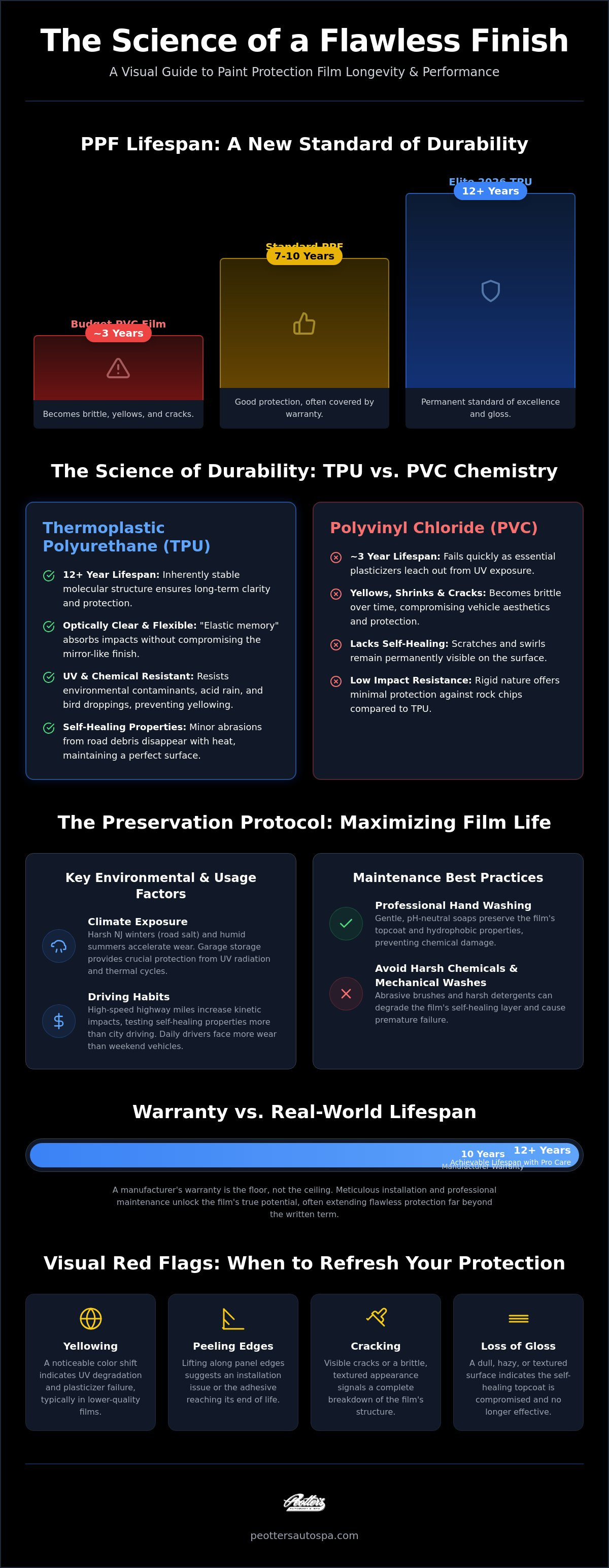
Modern vehicle owners often ask how long does ppf last with a specific goal in mind: permanent preservation. In 2026, the baseline for premium films is a robust 7 to 10 years. However, recent advancements in chemical engineering have pushed the ceiling for elite installations to 12 years or more. This extension represents a significant leap from the early days of the industry, where five years was considered a victory for any transparent shield. At Peotter’s Auto Spa, we view this decade-plus window as the standard for any vehicle treated with the level of care it deserves.
There is a subtle but vital distinction between a film that simply "lasts" and one that remains "flawless." A budget film might stay attached to the panel for years, but if it loses its clarity or develops a textured appearance, the aesthetic value of your vehicle is compromised. True longevity is measured by the film's ability to maintain a mirror-like finish while continuing to absorb the relentless impact of road debris. A professional installation by skilled technicians ensures that the film is tucked and sealed correctly, preventing the early edge failures that often plague high-volume shops.
Warranty vs. Real-World Lifespan
Most premium manufacturers now offer 10-year warranties that specifically cover yellowing, cracking, and delamination. These guarantees provide essential peace of mind, yet they are often the floor rather than the ceiling of what is possible. High-end thermoplastic urethane film is designed to endure far beyond its written term when maintained by specialists. The role of the installer is critical here; a meticulous application ensures that edges don't lift or trap contaminants, which is the primary reason warranty claims are initiated. When the bond is perfect, the film becomes a seamless part of the car's identity.
The Impact of Vehicle Usage
Your driving habits dictate the pace of film degradation. A weekend exotic that spends most of its life in a climate-controlled environment will naturally see the film last much longer than a daily driver. High-speed highway miles increase the frequency of kinetic impacts, which constantly tests the self-healing properties of the topcoat. While the film is engineered to recover from these minor abrasions, the sheer volume of road work can eventually take a toll on the surface gloss.
Environmental exposure also plays a decisive role in how long does ppf last. Vehicles kept in a garage are shielded from the constant cycle of UV radiation and thermal expansion. Conversely, cars parked outdoors 24/7 face a relentless barrage of elements. While modern films are engineered for resilience, the cumulative effect of sun and seasonal shifts will influence when a professional refresh is recommended to maintain that showroom glow.
The Science of Durability: TPU vs. PVC Chemistry
The foundation of elite vehicle preservation lies in the molecular structure of the film itself. When discerning owners investigate how long does ppf last, they are often comparing two vastly different materials: Thermoplastic Polyurethane (TPU) and Polyvinyl Chloride (PVC). In 2026, TPU has solidified its position as the only acceptable standard for high-end automotive protection. Unlike the rigid nature of budget films, TPU is a high-molecular-weight polymer designed for optical clarity and resilience. This advanced chemistry allows the film to remain transparent and flexible for over a decade, whereas older PVC technology typically becomes brittle and fails within three years.
PVC films rely on liquid plasticizers to achieve the flexibility required for installation. Over time, the harsh New Jersey sun causes these plasticizers to leach out, resulting in a film that yellows, shrinks, and eventually cracks. In contrast, the TPU used in our boutique installations is inherently stable. It serves as a molecular barrier that resists UV radiation and environmental contaminants, ensuring your vehicle's paint remains shielded from the elements. This chemical stability is why industry experts often suggest that owners can expect 7-10 years out of their PPF when utilizing premium materials and professional care.
The TPU Advantage
The technical superiority of TPU is most evident in its ability to absorb kinetic energy. When a stone strikes the surface, the film's "elastic memory" allows it to compress and dissipate the force, preventing the impact from reaching the paint. This material also provides exceptional resistance to chemical staining. Whether it is bird droppings, acidic rain, or industrial fallout, the dense topcoat prevents these contaminants from etching into the film. For those seeking the ultimate in surface security, combining this material with a professional paint correction creates a flawless foundation that remains pristine for years to come.
Self-Healing Technology Explained
Perhaps the most captivating feature of modern TPU is its self-healing topcoat. This specialized layer consists of a series of microscopic polymers that "flow" when triggered by heat. When your vehicle is exposed to the sun or rinsed with warm water, minor swirl marks and surface abrasions literally disappear as the polymer reforms its original, smooth state. This process ensures that the film maintains a high-gloss finish without the need for constant polishing. While this technology is remarkably effective against daily wear, it does have limits; deep gouges that penetrate the base layer will not heal. Maintaining this property requires a gentle touch and the avoidance of abrasive cleaners that could strip the specialized topcoat.
The Springfield Factor: How NJ Climate Affects PPF
The question of how long does ppf last becomes much more nuanced when you consider the specific environmental demands of Springfield, New Jersey. While manufacturers provide a baseline, our local climate acts as a relentless testing ground for any protective layer. The Union County corridor is defined by heavy traffic and industrial proximity, factors that introduce unique acidic contaminants into the air. These elements, combined with our volatile seasonal shifts, mean that your film's endurance is a direct result of how well it withstands the specific local gauntlet.
High-quality thermoplastic urethane film is engineered to be resilient, but it isn't invincible. The synergy between the material and the environment is where the real story of durability is written. In our boutique studio, we often see that the difference between a film lasting seven years or twelve years comes down to how the owner manages local hazards. From the humidity that can stress adhesives to the industrial fallout common near our major highways, every variable plays a role in the preservation of your vehicle's finish.
Winter Hazards for NJ Drivers
New Jersey winters introduce road salt and liquid brine, which are the primary catalysts for premature film degradation. These corrosive agents don't just sit on the surface; they find their way into every microscopic crevice. If salt crystals are allowed to dwell on the film for extended periods, they can abrade the topcoat and dull the mirror-like finish. Even worse, if the installation wasn't performed by a meticulous master craftsman, salt can penetrate the edges, leading to unsightly lifting. We recommend frequent rinses during the winter months, specifically focusing on the undercarriage and film boundaries to prevent this chemical buildup. A professional winter preparation service can also add a sacrificial layer of protection that helps the film repel these harsh winter cocktails.
Summer UV and Heat Cycles
When the humidity spikes and the sun beats down on Springfield, your vehicle's surfaces can reach temperatures exceeding 150 degrees, especially on dark-colored luxury cars. This intense heat causes the metal panels and the film to expand. Modern TPU is designed to move in harmony with your paint, but constant thermal cycling tests the adhesive's long-term bond. High UV exposure is also the leading cause of yellowing in inferior films. Premium films utilize advanced UV inhibitors to maintain their crystal-clear appearance, but the sheer intensity of a Jersey summer means that garage storage or ceramic-infused topcoats are wise preservation investments. These measures ensure the film remains supple and vibrant, rather than becoming dry and brittle under the relentless sun.
The Preservation Protocol: Maximizing Your Film's Life
The installation of elite protection is merely the beginning of your vehicle's preservation journey. While the question of how long does ppf last is often answered by the quality of the material, the ultimate duration is determined by your maintenance ritual. At Peotter’s Auto Spa, we advocate for a 'Touchless' philosophy that treats the film with the same reverence as the paint beneath it. Mechanical car washes are a death sentence for your investment. The abrasive brushes and recycled, grit-filled water act like liquid sandpaper, scouring the self-healing topcoat and dulling the vibrant gloss that defines a premium finish.
Chemical safety is equally critical for long-term resilience. You must avoid any waxes or cleaners containing petroleum distillates or harsh degreasers. These aggressive chemicals can migrate into the edges of the film, weakening the adhesive bond and causing premature lifting or yellowing. Instead, focus on high-quality, synthetic maintenance products designed specifically for high-end films. By following a strict preservation protocol, you ensure that your vehicle remains in a state of perpetual perfection, often extending the film's functional life well beyond the ten-year mark.
Professional Washing Techniques
Maintaining a flawless finish requires a methodical approach to cleaning. We recommend the two-bucket method paired with pH-neutral soaps to safely encapsulate dirt without stripping the film's protective properties. When it's time to dry, avoid dragging traditional towels across the surface. Instead, utilize filtered air or a high-GSM microfiber towel to gently blot the moisture away. This prevents micro-marring and preserves the film's optical clarity. For organic contaminants like bugs or bird droppings, never scrub the surface. Soak the area with a specialized lubricant to soften the debris, allowing it to be wiped away without etching the delicate topcoat.
PPF and Ceramic Coating Synergy
The most effective strategy for maximizing longevity is the integration of a secondary protective layer. By applying a ceramic coating springfield nj over your film, you create a permanent hydrophobic barrier. This combination prevents UV-induced oxidation and makes the surface significantly easier to clean. The coating fills the microscopic pores of the film, ensuring that water, salt, and grime slide off with minimal effort. For owners seeking the pinnacle of surface security, our ppf and ceramic coating package nj provides a comprehensive solution that shields every inch of your vehicle's exterior.
Quarterly inspections are the final pillar of professional care. Small issues, such as a slightly lifting edge or a trapped air bubble, can be easily corrected if caught early by a meticulous master craftsman. If you want to ensure your protection plan is performing at its peak, schedule a professional inspection at our boutique studio to maintain your vehicle's first-class appearance.
The Replacement Window: When to Refresh Your Protection
Even the most resilient shields eventually reach a point where retirement is necessary to preserve the integrity of the underlying surface. Understanding how long does ppf last requires an awareness of the transition from active protection to potential liability. When a film begins to show its age, it doesn't just lose its luster; it begins to lose its chemical bond with the vehicle. Identifying these signs early allows you to transition into a new cycle of preservation without risking the original factory finish. At Peotter’s Auto Spa, we guide our clients through this transition with the same meticulous care we apply to a new installation.
Visual red flags are the first indicators that your film is approaching its limit. You might notice a subtle yellowing that alters the color temperature of your paint, or a developing 'orange peel' texture that disrupts the mirror-like reflections. Loss of gloss is another significant sign, indicating that the self-healing topcoat has finally worn thin. Physical failures are more urgent; cracking (often called crazing), edge lifting, and dirt infiltration under the film are clear signals that the material is no longer providing a sealed barrier. Once the old film is safely removed, a professional paint correction union county nj is essential to refine the clear coat and restore its brilliance before a fresh layer of protection is applied.
The Risks of Over-staying
Adhering to a 10-year rule for replacement is a strategic decision that saves your paint from long-term damage. If you leave film on a vehicle for 15 years or more, you face the nightmare of adhesive crystallization. Over time, the adhesive can harden and fuse with the clear coat, making removal an incredibly delicate and labor-intensive process. Furthermore, degraded film loses its impact resistance; a brittle film cannot absorb the energy of a stone chip, allowing the force to transfer directly to the paint. Proactive replacement is always more cost-effective than repairing a compromised finish.
The Removal and Reinstallation Process
Safe removal is a craft that requires patience and specialized equipment. We utilize controlled heat and high-pressure steamers to soften the adhesive, allowing the film to be lifted without leaving residue or stressing the paint. Once the old material is gone, the clear coat must be thoroughly decontaminated to remove any lingering particles or environmental fallout. This ensures the new installation has a pristine foundation for a perfect bond. If you're unsure about the current state of your vehicle's shield, consult with our specialists for an ultimate guide to paint protection film assessment to determine the ideal timeline for your next preservation phase.
Ultimately, how long does ppf last depends on your commitment to excellence. By recognizing the signs of wear and choosing a boutique expert for your refresh, you ensure your vehicle remains a masterpiece of automotive design for decades to come.
Securing Your Automotive Legacy
Choosing the right protection is an investment in your vehicle's enduring value and aesthetic perfection. While the technical answer to how long does ppf last depends on the superior chemistry of modern TPU films, the real-world result is a product of meticulous craftsmanship and dedicated maintenance. By understanding the seasonal challenges of the New Jersey climate and committing to a professional preservation protocol, you can ensure your finish remains flawless for a decade or more. Premium materials and the right synergy with ceramic coatings create a barrier that is as resilient as it is beautiful.
As Springfield's premier boutique auto spa since 1994, Peotter’s Auto Spa specializes in the elite preservation of luxury and exotic vehicles. Our master craftsmen apply every layer with a level of precision that high-volume shops simply cannot match. We invite you to experience a white-glove service that treats your property with the absolute care it deserves. Book Your Precision PPF Consultation at Peotter's Auto Spa Today and secure a mirror-like finish that stands the test of time. Your vehicle is a masterpiece; let's keep it that way.
Frequently Asked Questions
Does PPF yellow over time on white cars?
Modern, high-quality TPU films are specifically engineered with advanced UV inhibitors to prevent the unsightly yellowing often seen in older technologies. When clients ask how long does ppf last on a white vehicle, they can expect a decade of crystal-clear transparency. This ensures that the pristine factory color remains vibrant and unaffected by the sun's relentless radiation.
Can I wax my car if it has paint protection film?
You can wax your film, but you must exclusively use products that are free from petroleum distillates and abrasive polishing agents. These chemicals can migrate into the material and degrade the self-healing topcoat over time. We recommend high-quality synthetic sealants or specialized ceramic maintenance sprays to enhance the gloss without compromising the film's structural integrity.
Will removing old PPF damage my vehicle's factory paint?
Professional removal will not damage original factory paint, provided the film is removed within its functional lifespan. Our specialists use controlled heat and precision steamers to soften the adhesive, ensuring a clean release from the clear coat. If the film is left for fifteen years or more, the adhesive can crystallize, making the preservation process significantly more complex.
How much longer does PPF last if I add a ceramic coating?
Adding a ceramic coating provides a permanent sacrificial barrier that shields the film from environmental oxidation and chemical etching. While it doesn't change the material's physical warranty, it ensures the film maintains its mirror-like gloss for its entire 10 to 12-year window. This synergy simplifies your maintenance routine and keeps the protection looking brand new for years to come.
Is it worth putting PPF on a car I plan to sell in 3 years?
Installing protection on a short-term investment is a strategic move that significantly enhances resale value. Prospective buyers of luxury and exotic vehicles prioritize flawless, original factory paint and are often willing to pay a premium for a protected car. It transforms the vehicle from a used commodity into a well-preserved asset that stands out in a competitive market.
What happens if a rock pierces the PPF? Does it still 'heal'?
Self-healing properties are designed to repair minor surface abrasions, such as swirl marks and light scratches, when exposed to heat. If a rock actually pierces the film's base layer, the material will not heal that specific puncture. However, the film has successfully performed its primary duty by sacrificing itself to prevent a deep, costly chip in your vehicle's paint.
How do I know if my PPF is TPU or PVC?
You can identify the material by its physical flexibility and optical clarity. TPU is remarkably soft and elastic, allowing it to stretch and conform to complex curves without losing its transparency. PVC is much stiffer, often develops a noticeable 'orange peel' texture, and typically begins to show signs of yellowing or brittleness within the first three years of exposure.
Can I use a pressure washer on my PPF-protected car?
Pressure washing is safe provided you maintain a distance of at least 18 inches from the vehicle's surface. You must avoid directing a concentrated stream of high-pressure water directly at the film's edges, as this can lead to lifting or moisture infiltration. Utilizing a wide-angle nozzle ensures a gentle yet effective cleaning process that preserves the integrity of the professional installation.