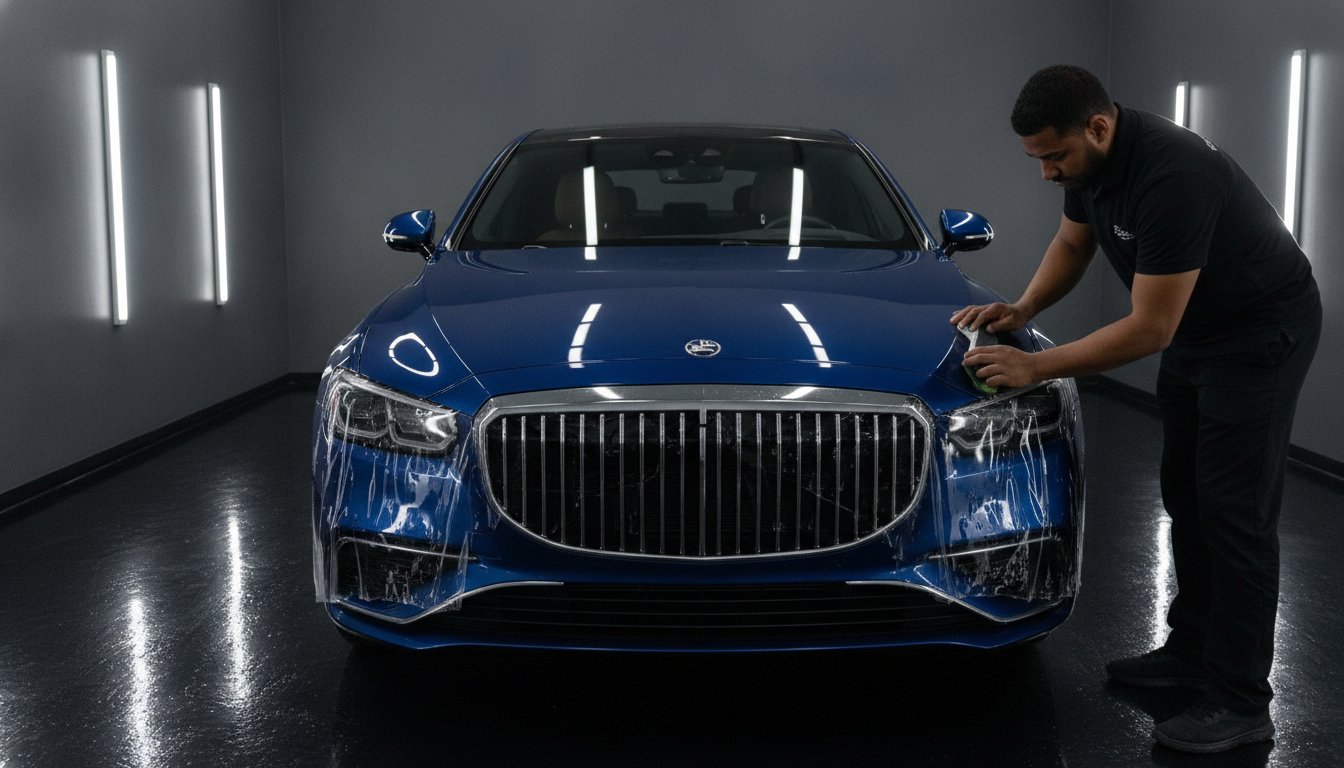
How to Protect New Car Paint: The 2026 Guide to Long-Term Preservation
Your brand-new vehicle's factory finish is more vulnerable today than it was a decade ago. While modern water-based paints are environmentally conscious, they are also thinner and softer, making them prone to immediate chipping and environmental etching. Understanding how to protect new car paint is no longer a matter of simple maintenance; it's a critical strategy for asset preservation. You've likely felt that familiar worry when following a gravel truck or parking under a tree, fearing the first permanent blemish on your pristine investment.
We understand that your car represents more than just transportation. It's a reflection of your standards and a significant financial commitment. This guide reveals the professional secrets to maintaining a flawless showroom finish and maximizing your vehicle's resale value through advanced protection technologies. We'll demystify the confusion between paint protection film, ceramic coatings, and paint correction. You'll discover how a meticulous, hybrid approach creates a resilient barrier, ensures an effortless cleaning experience, and provides the long-term peace of mind you deserve.
Key Takeaways
- Modern factory finishes are thinner and more delicate than ever, requiring immediate intervention to prevent early oxidation and fading.
- Discover how to protect new car paint by combining Paint Protection Film for impact resistance with ceramic coatings for deep, liquid-like gloss.
- Identify specific regional threats, such as corrosive road salt and coastal air, that can compromise your vehicle's finish without professional shielding.
- Follow a professional five-step preservation strategy that ensures every surface is decontaminated, corrected, and sealed for lasting resilience.
- Understand how elite-level application techniques maximize your vehicle's resale value while maintaining a flawless, easier-to-clean exterior.
Why New Car Paint Needs Immediate Protection in 2026
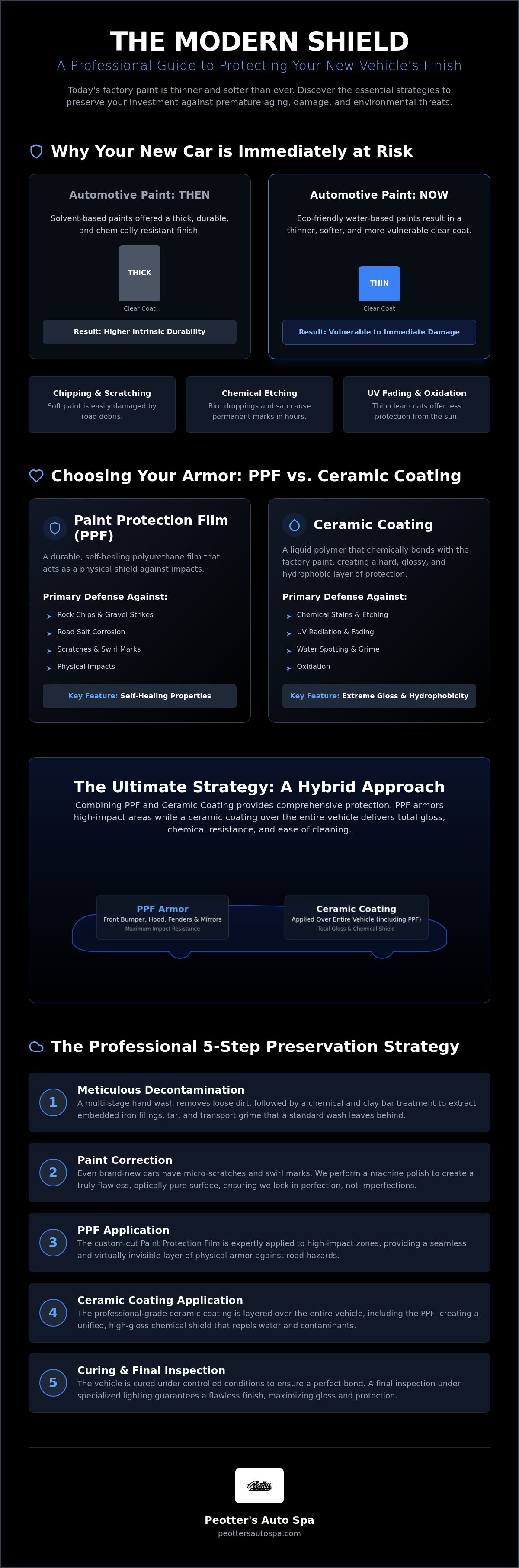
The moment you take delivery of a new vehicle, the clock begins to tick against its pristine condition. Many owners assume that a factory finish is a permanent shield, yet the reality of modern manufacturing tells a different story. Understanding how to protect new car paint starts with recognizing that today's automotive finishes are engineered for environmental compliance first and durability second. While these water-based systems reduce volatile organic compounds, they result in a clear coat that is significantly softer and thinner than the solvent-based paints of the past. This evolution in chemistry means your vehicle arrives more vulnerable to the world than you might expect.
The Vulnerability of Modern Clear Coats
Modern clear coats are the delicate skin of your vehicle, often measuring only two to three mils in thickness. This microscopic layer is your sole defense against the relentless assault of UV radiation, industrial fallout, and organic acids. Without a dedicated barrier like Paint Protection Film, the sun's rays can penetrate the clear coat, leading to premature oxidation and a dull, lifeless appearance. The soft nature of these paints also means that even a single encounter with bird droppings or tree sap can cause permanent etching within hours. These contaminants leach into the porous surface, creating imperfections that require aggressive correction to remove. Proactive preservation ensures your vehicle retains its lustre, depth, and clarity from the very first mile.
The Myth of the "Dealership Sealant"
Dealerships frequently offer "protection packages" during the financing process, but these are rarely the professional-grade solutions your investment deserves. Most dealership sealants are simple, quick-apply polymer sprays that provide a temporary shine but lack the structural bond and longevity of a specialist application. Beyond the product quality, the application process itself is often flawed. New vehicles frequently arrive at the lot with hidden imperfections. After traveling by rail, truck, and ship, they accumulate iron filings and transport grime that a standard wash won't remove. When a dealership applies a sealant over these contaminants, it merely traps the damage.
When you research how to protect new car paint, you will find that the most critical window for preservation is the first week of ownership. A specialist approach identifies the micro-scratches and swirl marks often present on "new" showroom cars. By performing a meticulous decontamination and paint correction before sealing the surface, we ensure the finish is truly flawless. This process locks in the factory's "day one" brilliance, preventing environmental damage from ever reaching the paint and ensuring your vehicle remains a high-value asset. It is a transition from simple maintenance to true automotive guardianship.
Paint Protection Film vs. Ceramic Coating: Choosing Your Armor
Selecting the right defense for your vehicle requires an understanding of how different technologies interact with the environment. When discerning how to protect new car paint, you aren't just choosing a product; you're selecting a level of resilience. While both options enhance your vehicle's longevity, they serve distinct roles in the preservation process. One acts as a physical shield against impact, while the other functions as a chemical barrier that amplifies brilliance. Understanding these differences ensures your investment remains pristine, radiant, and resilient for years to come.
PPF: The Physical Barrier for New Jersey Roads
For drivers navigating the debris-prone stretches of the Garden State Parkway or the NJ Turnpike, paint protection film is the essential gold standard. This high-grade polyurethane layer is designed to absorb the kinetic energy of flying gravel and road salt. Modern films feature sophisticated self-healing properties; the heat from the sun or your garage allows minor surface scratches to literally vanish. By focusing application on high-impact zones like the front bumper, hood, fenders, and side mirrors, you create a sacrificial layer that preserves the underlying factory paint from permanent damage. It's a meticulous solution for those who demand absolute physical security.
Ceramic Coating: The Science of Permanent Gloss
If your goal is a deep, liquid-like shine that repels contaminants, ceramic coatings offer an unparalleled chemical shield. This nano-glass technology bonds at a molecular level with your clear coat, creating a semi-permanent surface that is incredibly smooth. As noted in Car and Driver's 2026 ceramic coating tests, professional formulations provide superior resistance to bird droppings, tree sap, and industrial fallout. For busy professionals, the "self-cleaning" effect is a significant benefit; water and grime slide off with minimal effort. Investing in ceramic coating in Springfield, NJ ensures your vehicle maintains a "just-detailed" appearance regardless of the season.
The ultimate preservation strategy involves a hybrid approach. By applying PPF to high-impact areas and covering the entire vehicle in a professional ceramic coating, you achieve the best of both worlds. This combination provides a resilient, radiant, and remarkably easy-to-maintain finish. While professional coatings typically offer two to five years of protection, high-quality film can last between five and ten years. This tiered strategy maximizes your vehicle's resale value by keeping the exterior in showroom condition. To secure your vehicle's future value, choosing a professional paint protection film application is the most effective way to lock in that flawless finish.
Environmental Threats for New Jersey and Springfield Drivers
Driving in New Jersey demands more from a vehicle's exterior than almost any other region in the country. From the industrial corridors of the Northeast to the humid, salt-laden breezes of the Jersey Shore, your car is under constant environmental siege. When considering how to protect new car paint, local context is everything. Generic maintenance advice often fails to account for the specific chemical and physical stressors found on the Garden State Parkway or the NJ Turnpike. For the discerning owner, understanding these regional threats is the first step toward a successful long-term preservation strategy.
Defeating the "NJ Winter" Corrosion
The New Jersey winter presents a unique chemical challenge. Municipalities across the state now favor aggressive salt-brine mixtures that are designed to stick to the road, but they also cling tenaciously to your vehicle's unprotected undercarriage and lower panels. These mixtures are highly corrosive and can initiate rapid oxidation on even the newest finishes. According to NHTSA's new vehicle paint protection guidelines, shielding your paint from these road chemicals is vital for preventing long-term structural damage. A professional ceramic coating provides a slick, hydrophobic surface that makes it difficult for salt to bond, while paint protection film acts as a necessary shield against the heavy gravel and road debris kicked up during winter storms.
Urban Debris and Daily Commuting
Daily life in Springfield presents its own set of hazards. Navigating crowded parking lots means your vehicle is constantly at risk of door dings and shopping cart scrapes. These minor impacts can easily penetrate modern, thin clear coats, leaving permanent scars on your investment. Furthermore, the heavy stop-and-go traffic common in our area leads to a significant accumulation of metallic brake dust. These hot particles can embed themselves into your paint, leading to tiny rust spots known as rail dust.
Preserving your vehicle's value requires a comprehensive approach. Beyond the paint itself, the intense UV exposure during New Jersey's humid summers can accelerate the fading of your interior and the oxidation of your exterior trim. Integrating professional window tinting alongside your paint protection strategy ensures that every surface of your vehicle is shielded from the sun's destructive rays. By addressing these local environmental factors with elite-level protection, you ensure your car retains its showroom brilliance despite the rigors of the Northeast climate. This proactive guardianship is the only way to truly master how to protect new car paint in a high-traffic environment.
The 5-Step New Car Paint Preservation Strategy
Achieving a lasting showroom finish requires a disciplined, multi-stage approach that prioritizes precision over speed. While many owners look for a single product to solve their concerns, the secret to true automotive guardianship lies in a methodical sequence of treatments. This strategy ensures that every microscopic pore of the clear coat is cleaned, leveled, and sealed against the elements. By following this professional roadmap, you transform your vehicle from a factory-standard machine into a protected work of art. Discovering how to protect new car paint is a journey that begins with meticulous preparation and ends with a sustainable maintenance ritual.
- Professional Decontamination: We begin by removing rail dust, industrial fallout, and transport iron that standard washing cannot touch.
- Expert Paint Correction: This stage eliminates factory-born swirl marks and ensures the surface is optically clear before we apply any protective layers.
- Strategic PPF Application: We install high-grade film on high-velocity impact zones to stop stone chips and physical abrasions in their tracks.
- Full-Body Ceramic Sealing: A professional coating is applied over the entire exterior to provide total chemical resistance and a deep, liquid gloss.
- Touchless Maintenance: Establishing a washing routine that avoids physical contact with brushes preserves the integrity of the protective barrier.
Why Correction Must Precede Protection
It is a common misconception that a vehicle fresh from the assembly line is flawless. In reality, factory sanding marks and transport-related defects are nearly universal. Performing paint correction in Union County, NJ is a non-negotiable step because it levels the clear coat to a mirror-like finish. Applying a permanent coating or film over existing scratches simply "locks in" those imperfections, making them impossible to fix without removing the protection later. Correction enhances the depth, clarity, and brilliance of your paint, providing the perfect foundation for our advanced shielding technologies.
Developing a Maintenance Ritual
The longevity of your investment depends heavily on how you care for it after the initial application. To avoid creating new swirl marks, you should adopt a "touchless" or low-friction washing method using pH-neutral soaps and the two-bucket system. Automated "brush" car washes are the primary enemy of a flawless finish; they act like sandpaper against your delicate clear coat. Instead, utilize high-quality microfiber and periodic "top-up" sprays to maintain the extreme hydrophobicity of your ceramic layer. This consistent care ensures your vehicle remains effortless to clean while retaining its elite-level shine. If you're ready to secure your vehicle's future, schedule a consultation with our specialists to design your custom preservation plan.
Professional Preservation at Peotter’s Auto Spa
Choosing a specialist to safeguard your vehicle is a decision rooted in trust, expertise, and a shared passion for automotive excellence. At Peotter’s Auto Spa, we bring over 30 years of heritage to every project, offering a sophisticated "white-glove" experience that begins with a meticulous multi-point inspection. We understand that your vehicle is a significant investment, and our role is to act as its dedicated guardian. By combining elite-level skill with the industry's most advanced technologies, we provide the definitive answer for how to protect new car paint in a way that exceeds factory standards. Our certified technicians treat every curve and contour with the precision of a master craftsman, ensuring a result that is as durable as it is beautiful.
For those seeking the pinnacle of automotive care, our PPF and ceramic coating package offers a comprehensive solution that addresses both physical and chemical threats. This hybrid approach leverages the impact resistance of film alongside the radiant, hydrophobic properties of a professional coating. It is a harmonious blend of science and artistry, designed to provide total vehicle preservation for the most discerning owners. Our process is transparent, methodical, and uncompromising, ensuring that your vehicle receives the elite-level attention it deserves.
The Craftsmanship of Precision Installation
The difference between a standard application and a professional result lies in the smallest details. While many shops rely on generic, pre-cut templates, we specialize in custom-plotted and hand-trimmed techniques that allow for seamless edge-wrapping. This meticulous process ensures that the film is virtually invisible, protecting your paint without compromising its aesthetic lines. Our Springfield, NJ studio features a climate-controlled, dust-free environment specifically engineered for high-precision work. This controlled setting eliminates the risk of contaminants becoming trapped under the surface, a standard of care that is reflected in our professional-grade warranties and ongoing client support. We don't just apply products; we rejuvenate, protect, and enhance.
Investing in Your Vehicle’s Future
Professional paint preservation is more than a luxury; it's a strategic financial decision that pays dividends at the time of resale or lease return. A vehicle that retains its original, chip-free lustre commands a significantly higher market value, often paying for the cost of protection several times over. Beyond the numbers, there is a profound emotional reward in driving a car that looks "just delivered" every single day. We invite you to visit our Springfield studio for a personalized paint assessment, where we can discuss how to protect new car paint through a customized plan tailored to your driving habits and long-term goals. Your journey toward permanent perfection starts with a consultation with our elite specialists, ensuring your property remains a source of pride for years to come.
Secure Your Vehicle's Showroom Legacy
Preserving a modern vehicle requires moving beyond standard maintenance into a practice of elite-level guardianship. You now understand that factory paint is more delicate than ever, making immediate intervention essential to combat New Jersey's unique environmental stressors. By integrating high-impact paint protection film with the radiant chemical resistance of a ceramic coating, you create a resilient barrier that locks in perfection. This strategic approach ensures your car remains a high-value asset while providing an effortless, liquid-like shine that lasts for years.
At Peotter’s Auto Spa, we bring over 30 years of automotive restoration expertise to every vehicle we touch. Our certified installers specialize in precision paint correction and advanced shielding technologies, ensuring a flawless foundation for your long-term protection. If you're ready to master how to protect new car paint and ensure your investment remains in pristine condition, we invite you to experience our boutique-style service. Schedule Your New Car Protection Consultation in Springfield today and take the first step toward permanent automotive excellence. Your vehicle deserves a finish that reflects your highest standards and rewards your pride of ownership.
Frequently Asked Questions
Is it worth ceramic coating a brand-new car immediately?
It is absolutely worth it. Applying a coating immediately ensures that your vehicle's first encounter with the world happens through a resilient barrier. This proactive step prevents the initial oxidation and etching that can occur within the first month of ownership. It's the most effective way to start your journey of knowing how to protect new car paint while the surface is still in its most pristine state.
Will paint protection film (PPF) change the color of my new car?
High-quality polyurethane films are engineered to be optically clear and virtually invisible. They won't alter the color or hue of your vehicle; instead, they often enhance the depth and clarity of the factory finish. When installed by specialists who focus on edge-wrapping, the film becomes a seamless part of the car's aesthetic. You get the benefit of physical defense without sacrificing the visual integrity of your investment.
How long does a professional paint protection treatment take to apply?
A comprehensive application typically requires between two and five days to complete. This timeline allows our technicians to perform a meticulous decontamination, precise paint correction, and the careful installation of film or coatings. Rushing this process compromises the bond and the final finish. We prioritize a controlled environment to ensure every layer cures perfectly, giving you a result that stands the test of time.
Can I wash my car normally after getting a ceramic coating?
You can wash your car, but your routine should shift toward a touchless or low-friction approach. Automated brush car washes should be avoided as they can mar even the most resilient coatings over time. Because the ceramic layer is extremely hydrophobic, dirt and grime will slide off much more easily during a standard hand wash. This makes maintaining a flawless appearance simpler and more efficient for the owner.
What is the difference between a wax and a professional ceramic coating?
Traditional wax is an organic sacrificial layer that sits on top of the paint and lasts only a few weeks. In contrast, a professional ceramic coating is a liquid polymer that bonds at a molecular level to create a semi-permanent glass shield. This advanced technology provides significantly higher heat resistance, chemical protection, and longevity. It represents a transition from temporary shine to permanent surface enhancement.
Does PPF protect against door dings and shopping carts?
Paint protection film is specifically designed to absorb the kinetic energy of physical impacts. It provides a robust defense against stone chips, door dings, and minor scrapes from shopping carts in crowded lots. While it isn't an armor against major collisions, its polyurethane structure is thick enough to prevent most daily road hazards from penetrating through to the delicate clear coat.
Should I get paint correction on a car that only has 50 miles on it?
Most new vehicles arrive with factory sanding marks or transport-related swirl marks that are visible under professional lighting. Even with only 50 miles on the odometer, paint correction is necessary to level the clear coat and reveal the true depth of the color. Sealing the paint without correction would permanently trap these defects under your protective layer, which is why we consider it a vital prerequisite for knowing how to protect new car paint correctly.
How do I maintain my car paint protection during a New Jersey winter?
Frequent rinsing is the key to surviving a New Jersey winter. Salt brine and road chemicals are highly corrosive, so you should use a touchless wash to remove these contaminants before they have a chance to bond. Utilizing a ceramic-infused maintenance spray can also help bolster the hydrophobic properties of your coating. This ensures that winter debris slides off the surface, preventing the chemical etching that often occurs during the colder months.