Legal Window Tint in New Jersey: The 2026 Guide to Compliance and Style
Achieving a flawless, high-end look for your vehicle shouldn't mean constantly watching your rearview mirror for flashing lights. You likely appreciate the privacy and heat rejection that premium films provide, but the strict regulations surrounding legal window tint nj often feel like a barrier to your car's true potential. It's frustrating to choose between a comfortable interior and the risk of a significant fine or a mandatory removal order. We believe that true automotive excellence requires technical precision, elite craftsmanship, and a deep respect for the rules of the road.
This guide empowers you to master the nuances of New Jersey's 2026 standards so your vehicle remains both legally compliant and aesthetically superior. You will discover how to balance VLT percentages for different vehicle classes, learn why advanced ceramic films offer a sophisticated solution for heat rejection, and understand the specific steps for securing a 48-month medical waiver. By the end, you'll have a clear roadmap to a vehicle that is protected, polished, and perfectly within the law.
Key Takeaways
- Understand the precise VLT requirements for legal window tint nj to ensure your vehicle meets 2026 standards while maintaining a sophisticated, high-end appearance.
- Navigate the NJMVC medical exemption process to secure long-term approval for front-window protection if you suffer from light-sensitive conditions.
- Discover how advanced ceramic films provide elite heat rejection and UV protection without the need for illegal darkness, keeping your cabin cool and compliant.
- Master the "factory match" strategy for SUVs to create a seamless, cohesive aesthetic that enhances the vehicle’s profile and preserves its resale value.
- Learn why professional micro-edging and meticulous installation are essential for achieving a flawless finish that avoids the common pitfalls of non-compliant films.
Decoding New Jersey Window Tinting Laws: Visible Light Transmission (VLT)
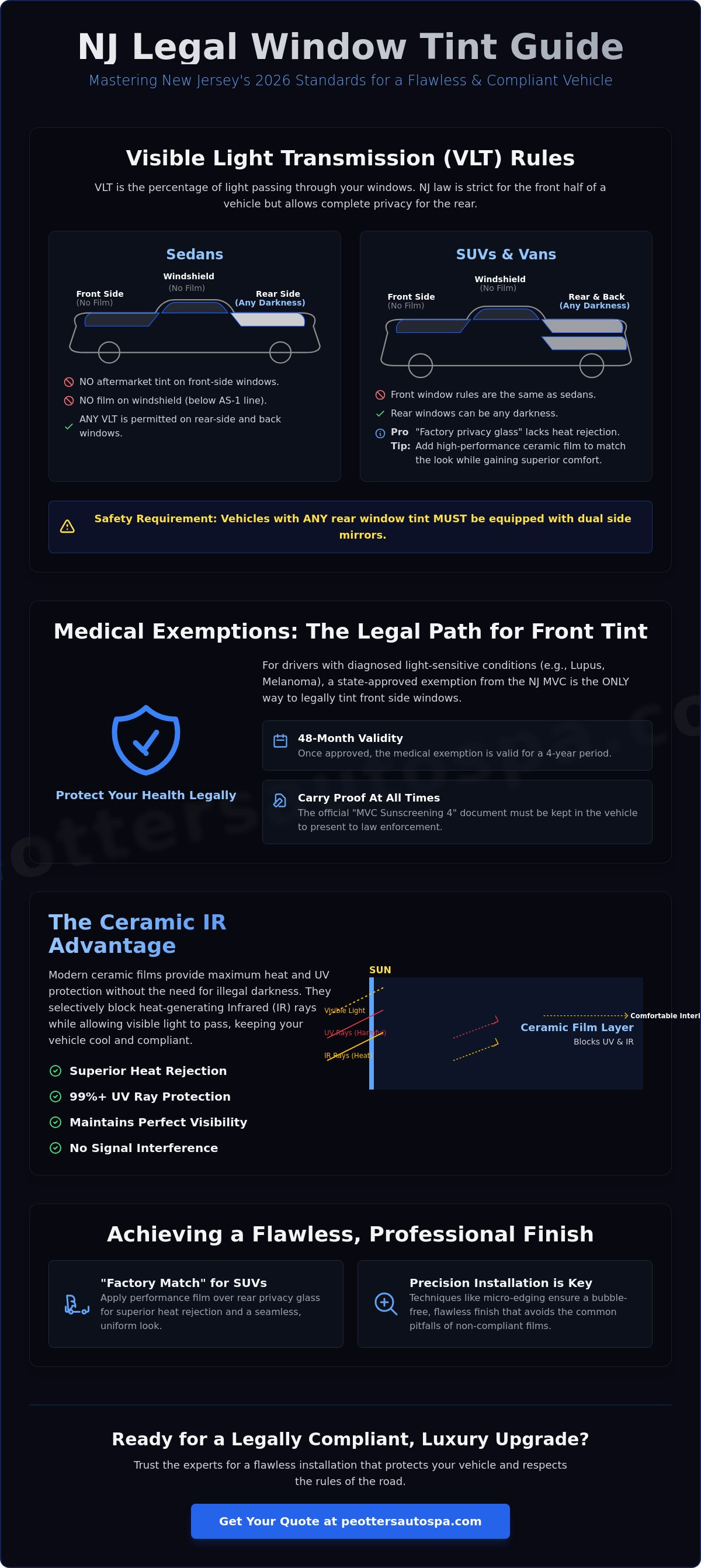
Visible Light Transmission, or VLT, serves as the definitive metric for measuring how much light can pass through your vehicle’s glass. Understanding this percentage is the first step toward ensuring your legal window tint nj remains beyond reproach. For those seeking a deeper understanding of Window film technology, it's helpful to view VLT as a balance between aesthetic privacy, thermal comfort, and regulatory compliance. In New Jersey, the Motor Vehicle Commission maintains a stance of zero tolerance for the front half of the vehicle. This means any film applied to the windshield or front side windows that reduces light transmission below the factory standard is technically non-compliant.
While the front is strictly regulated, New Jersey offers a surprising amount of creative freedom for the rear of your car. You can choose any level of darkness for the rear side windows and the back window. This flexibility allows for a striking, high-contrast look that provides significant privacy for passengers and cargo alike. However, applying any tint to the rear window triggers a specific safety requirement: your vehicle must be equipped with dual side mirrors to ensure clear visibility for the driver. This rule ensures that even if your rear view is obscured by dark film, you maintain a safe awareness of your surroundings.
VLT Requirements for Sedans
For the classic sedan profile, the rules are rigid yet clear. The windshield must remain completely clear, though you may apply a non-reflective sun strip above the AS-1 line to mitigate glare. The front side windows must also remain free of aftermarket film. This preserves the driver’s visibility during low-light conditions and ensures law enforcement can see into the cabin. Conversely, the rear side and back windows can be as dark as you desire. This allows you to protect your interior upholstery, keep the cabin cool, and maintain a sense of elite seclusion without risking a ticket.
VLT Requirements for SUVs and Vans
SUVs and vans follow a similar regulatory logic but often start with a different baseline. The windshield and front side windows are subject to the same restrictive policy as sedans. However, many of these larger vehicles come from the manufacturer with "factory privacy glass" on the rear windows. It's vital to distinguish this from aftermarket film. Factory glass is deeply pigmented to provide privacy, but it lacks the heat-rejection properties of premium legal window tint nj. Upgrading these windows with high-performance film allows you to achieve superior thermal comfort while matching the factory darkness level for a seamless, professional finish that looks uniform and sophisticated.
Navigating Medical Exemptions for NJ Window Tinting
While New Jersey’s general statutes are notoriously strict, the state recognizes that some drivers require enhanced protection for legitimate health reasons. If you suffer from photosensitivity, chronic skin disorders, or conditions like Lupus and Melanoma, securing a medical exemption is the only path to a legal window tint nj on your front side windows. The New Jersey Motor Vehicle Commission (MVC) oversees this process with meticulous care. They ensure that those who truly need UV protection can drive without discomfort or the fear of legal repercussions. This pathway transforms your vehicle into a safe sanctuary, shielding your skin from the harsh effects of direct sunlight.
Once granted, a permanent medical exemption remains valid for 48 months. This four-year cycle ensures that your status is documented while maintaining the integrity of state road safety standards. It's vital to remember that an approved waiver isn't just a verbal agreement. You must carry the "MVC Sunscreening 4" document in your vehicle at all times. This credential serves as your definitive proof of compliance during any roadside interaction. For those with medical needs, choosing high-performance film is essential for maximum UV rejection. You can learn more about the technical benefits of these materials by reading What Is Ceramic Window Tint? and how it effectively filters harmful rays.
The 8-Step Application Process
The journey to a medical waiver begins with formal documentation rather than a trip to the tint shop. First, you must request and complete the MVC Sunscreening 1 application form. This document captures your personal and vehicle details. Second, you'll need to obtain a valid prescription and a detailed physician statement from a licensed doctor. This statement must clearly explain why your condition necessitates window film. Finally, you submit the entire package to the Customer Advocacy Office in Trenton for review. This administrative precision ensures your request is handled with the professional gravity it deserves.
Installation with a Medical Waiver
Receiving your initial approval letter is a significant milestone, but the process doesn't end there. New Jersey requires that your film be applied by a licensed sunscreening facility. This ensures the material used meets specific safety and performance criteria. After the job is done, the technician must sign the "Installation Confirmation" form (MVC 3). This document verifies that the work was performed to state standards. Once you submit this final confirmation, you'll receive your permanent approval card. This meticulous approach guarantees your vehicle is a safe, protected sanctuary. If you're ready to begin this transformation, our specialists at Peotter’s Auto Spa can guide you through the technical requirements of a medical installation.
Strategic Tinting: Achieving the Luxury Look Legally
Elevating a vehicle’s profile is an art form that requires a delicate balance between personal privacy and regulatory adherence. Sophisticated owners understand that a premium aesthetic is not defined by how dark the glass is, but by how seamlessly the film integrates with the vehicle’s lines. Achieving a high-end look with legal window tint nj involves a strategic approach to light and shadow. While some may attempt to bypass the law with non-compliant shades, a professional installation ensures your car makes a statement of prestige without inviting unnecessary legal scrutiny. A meticulously finished window reflects a standard of excellence that preserves your investment and your peace of mind.
One of the most critical aspects of maintaining a luxury appearance is the quality of the material itself. You must strictly avoid mirrored or metallic films, as these are explicitly banned under New Jersey law for their high reflectivity. Beyond the legal risks, these films often create a dated, distracting look that clashes with modern automotive design. Similarly, low-end dyed films are prone to "purpling" and bubbling over time. This degraded appearance is a visual signal of neglect that frequently attracts the attention of law enforcement. By choosing elite, color-stable films, you ensure a deep, consistent charcoal or black finish that remains flawless for years to come.
Sedan Aesthetics: The Gradient Approach
For sedans, the most effective way to achieve a cohesive look is the gradient approach. Since front windows must remain clear, we utilize high-performance, nearly invisible ceramic films on the front doors to provide maximum heat rejection and UV protection. This is paired with a darker, legal shade on the rear glass to create a sophisticated silhouette. This strategy ensures your cabin remains comfortable while window tint to prevent interior fading preserves your luxury upholstery, dash materials, and leather trim. It is a perfect harmony of exterior compliance and interior preservation.
SUV and Van Privacy Standards
Owners of SUVs and vans often face the challenge of "factory privacy glass," which provides a dark tint on the rear windows but offers very little in the way of thermal protection. To achieve a seamless aesthetic, we apply high-performance films that match the VLT of the factory-dyed glass. This "factory match" strategy creates a uniform, obsidian look across the entire rear section of the vehicle. When enhancing these larger vehicles, we ensure the dual side mirror requirement is met, providing you with a vehicle that is cooler, more private, and fully compliant with legal window tint nj standards. This meticulous attention to detail ensures your SUV looks as though it was custom-ordered from the factory with a premium protection package.
Performance Without the Darkness: The Ceramic IR Advantage
A common misconception persists among vehicle owners that the darker a window film is, the more heat it rejects. This myth often leads drivers to install illegal shades that compromise safety and invite unwanted attention. In reality, the shade of the film has very little to do with its ability to block thermal energy. High-performance legal window tint nj relies on sophisticated material science rather than dark dyes. By prioritizing technology over opacity, you can maintain a crystal-clear view while enjoying a cabin that remains remarkably cool, even during the peak of a Springfield summer.
Nano-ceramic technology represents the pinnacle of this scientific evolution. Unlike traditional films, ceramic IR window tint utilizes microscopic, non-metallic particles to filter the solar spectrum. These films block 99% of harmful UV rays, protecting your skin and eyes from long-term damage. More importantly, they target Infrared (IR) radiation. IR light is the primary source of the "burning" sensation you feel on your skin when the sun hits your windows. By rejecting these wavelengths, ceramic films provide an elite level of comfort without the need for a dark, non-compliant aesthetic.
Why Ceramic Tint is the Premium Choice
For the discerning owner, the benefits of ceramic film extend far beyond temperature control. One of the most significant advantages is signal clarity. Because these films contain no metal, they won't interfere with your GPS, cellular reception, or satellite radio signals. This ensures your vehicle's tech remains as flawless as its appearance. Additionally, ceramic films offer superior durability. They're engineered to resist the fading, bubbling, and purpling that plague cheaper alternatives. You can explore these differences in depth by reviewing our ceramic tint vs regular tint comparison to see why the investment is worthwhile.
The "Clear" Protection Loophole
New Jersey's strict front-window regulations don't mean you have to sacrifice protection. By using 70% or 80% VLT ceramic films, you can achieve a "clear" look that satisfies legal window tint nj standards while still providing substantial Total Solar Energy Rejection (TSER). These films are nearly invisible to the naked eye, preserving your night visibility and the original design of your vehicle. It's a sophisticated solution for the driver who values safety as much as comfort. If you're ready to upgrade your driving experience with elite heat rejection, consult with our master craftsmen to find the perfect film for your vehicle.
Why Professional Installation Matters for Legal Compliance in Springfield
Selecting a facility for your vehicle’s transformation is a decision that impacts both its aesthetic prestige and its legal standing. In Springfield and across Union County, the risks of DIY kits or low-end shops are significant. These budget alternatives often utilize high-reflection, metallic films that are explicitly non-compliant under state law. Achieving a legal window tint nj requires more than just a roll of film; it demands a clinical environment where every variable is controlled. A dust-free, pressurized studio is essential for a "factory" finish, as even the smallest particle of debris can cause bubbling that eventually leads to delamination and legal scrutiny.
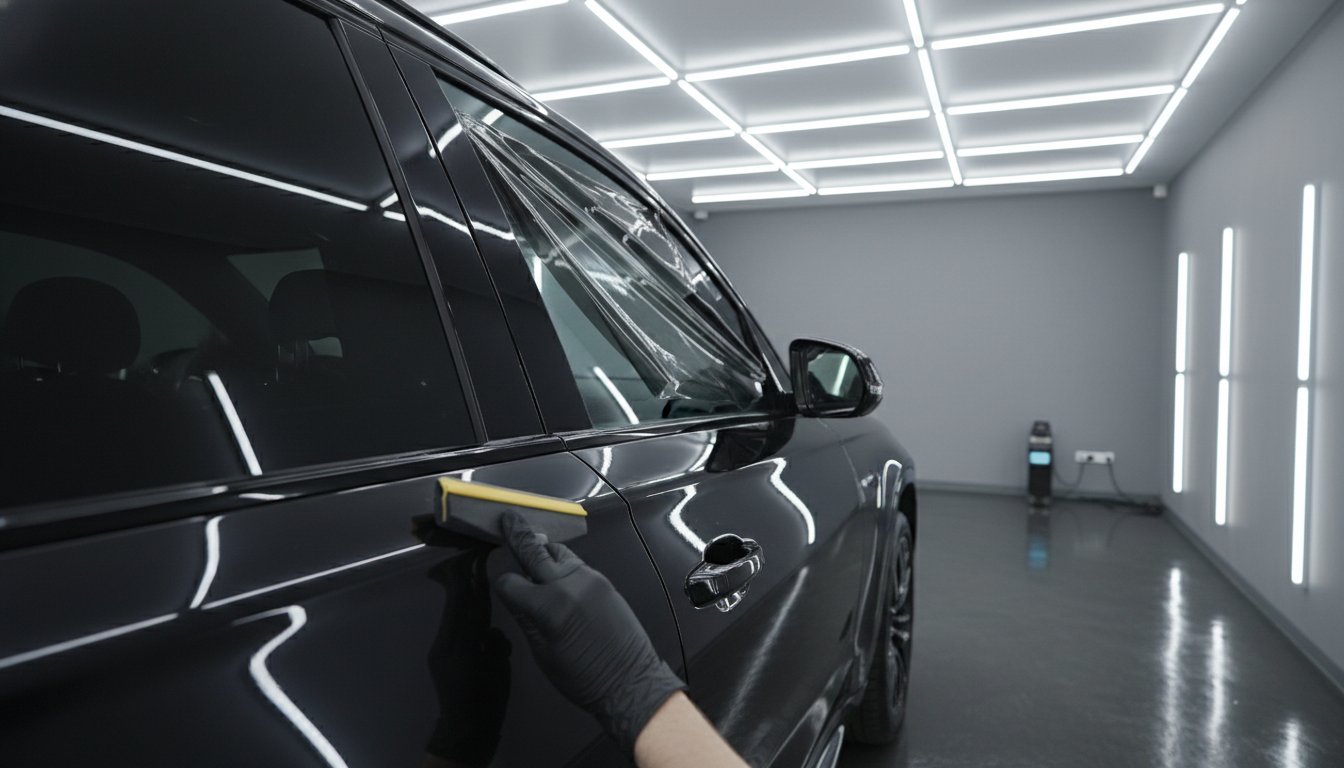
Precision is the hallmark of a master craftsman. While standard shops often leave noticeable gaps at the top of the glass, we utilize precision micro-edging to ensure the film reaches the very limit of the window. This meticulous attention to detail prevents the unsightly "aftermarket" look that often attracts the attention of law enforcement. We view window protection as a single, vital component of a comprehensive preservation strategy. Integrating your film application with paint correction union county nj allows us to restore the exterior’s brilliance while the tint safeguards the interior’s luxury. This holistic approach ensures your vehicle remains a pristine, high-value asset.
Peotter’s Meticulous Approach to Tinting
Our process is defined by a deliberate, steady rhythm of craftsmanship. We utilize hand-trimmed or precision-cut patterns tailored to the exact specifications of your vehicle’s glass. This ensures a flawless fit that appears as though it was bonded to the glass at the factory. Our specialists act as trusted advisors, providing expert guidance on selecting the optimal VLT for your specific vehicle class. This commitment to perfection reflects the "master craftsman" standard of the Peotter’s Auto Group, where quality is never sacrificed for volume. We provide the white-glove service your investment deserves.
The Long-Term Value of Quality
A professional installation is an investment in your vehicle’s long-term resilience and resale value. We provide lifetime warranties against common defects like peeling, bubbling, or the dreaded purple fade. This documented protection serves as a badge of quality for future owners, proving that the vehicle has been maintained by elite specialists. By choosing a legal window tint nj that is installed with technical precision, you ensure your car remains both a sanctuary of comfort and a masterpiece of style. For a deeper exploration of luxury protection standards, visit our window tint summit nj pillar to learn how we preserve the world’s finest automobiles.
Refine Your Vehicle’s Presence with Confidence
Mastering the complexities of New Jersey’s window standards allows you to transform your vehicle into a private, temperature-controlled sanctuary without compromising on safety. You now understand that achieving a premium aesthetic with legal window tint nj is a matter of choosing the right technology rather than the darkest shade. By utilizing advanced ceramic IR films and adhering to VLT requirements, you protect your interior’s luxury while maintaining absolute compliance with state law.
At Peotter’s Auto Spa, we have been family-owned since 1994, dedicated to the art of luxury and exotic vehicle preservation. As authorized installers of premium nano-ceramic films, we bring a master craftsman’s eye to every precision-cut edge and hand-trimmed finish. Our boutique-style approach ensures that your property is treated with the meticulous care it deserves. It's our passion to provide results that exceed expectations and preserve your vehicle's long-term value.
Schedule Your Precision Window Tint Consultation in Springfield today to experience the perfect blend of style and protection. We look forward to helping you achieve a flawless result that reflects your commitment to excellence.
Frequently Asked Questions
Is 35% tint legal in New Jersey?
No, a 35% VLT film is not legal for the front side windows of any vehicle in New Jersey. The state maintains a strict zero-tolerance policy for aftermarket film on the front half of the cabin. However, you can legally apply 35% tint, or even darker shades, to the rear side and back windows of sedans, SUVs, and vans without restriction.
Can I get a medical exemption for window tint in NJ?
Yes, the New Jersey Motor Vehicle Commission provides a formal pathway for medical exemptions if you suffer from conditions like photosensitivity or chronic skin disorders. This process requires a certified physician’s statement and a formal application through the MVC. Once approved, you can legally install legal window tint nj on your front windows to protect your health while driving.
What happens if I get pulled over with illegal tint in New Jersey?
If you are stopped with non-compliant film, an officer will typically issue a summons that results in a fine or a "fix-it" ticket. You'll be required to remove the illegal film and present the vehicle for inspection to prove the correction was made. Failing to address the issue can lead to escalating fines and potential vehicle impoundment for repeat offenses.
Does NJ inspection check for window tint?
Yes, state inspection facilities often evaluate window film during the safety and visibility portion of the vehicle examination. If your windshield or front side windows have non-compliant aftermarket tint, your vehicle will fail the inspection. You'll be required to strip the film and return for a re-inspection before a valid inspection sticker can be issued for your vehicle.
Are there any colors of window tint that are illegal in NJ?
Mirrored and metallic reflective films are explicitly banned on all windows in New Jersey because they can create dangerous glare for other drivers. While the state doesn't specifically ban certain colors, any film that significantly distorts visibility is prohibited. We recommend choosing neutral, charcoal, or black ceramic films to ensure your vehicle maintains a sophisticated and fully compliant appearance.
Do I need a special sticker on my windows if I have a medical exemption?
No, New Jersey law does not require you to display a specific sticker on your glass to indicate a medical waiver. Instead, the driver must carry the official MVC Sunscreening approval card within the vehicle at all times. This document is your primary proof of compliance and must be presented to law enforcement or inspection officials upon request.
How much does a window tint ticket cost in NJ?
Fines for violating legal window tint nj regulations usually start at under $100 for an initial offense. However, the state treats repeat violations with increased severity, and fines can climb as high as $500 for persistent non-compliance. These costs are often compounded by the expense of professional film removal and the potential for a failed state inspection.
Can I tint my windshield in New Jersey if I have a doctor’s note?
Yes, you may tint the windshield, but only after your medical application has been formally approved by the NJMVC. A simple doctor's note is not sufficient for legal compliance during a traffic stop. Once you receive the official state waiver, the installation must be performed by a licensed facility to ensure the material meets the specific safety requirements for windshield applications.