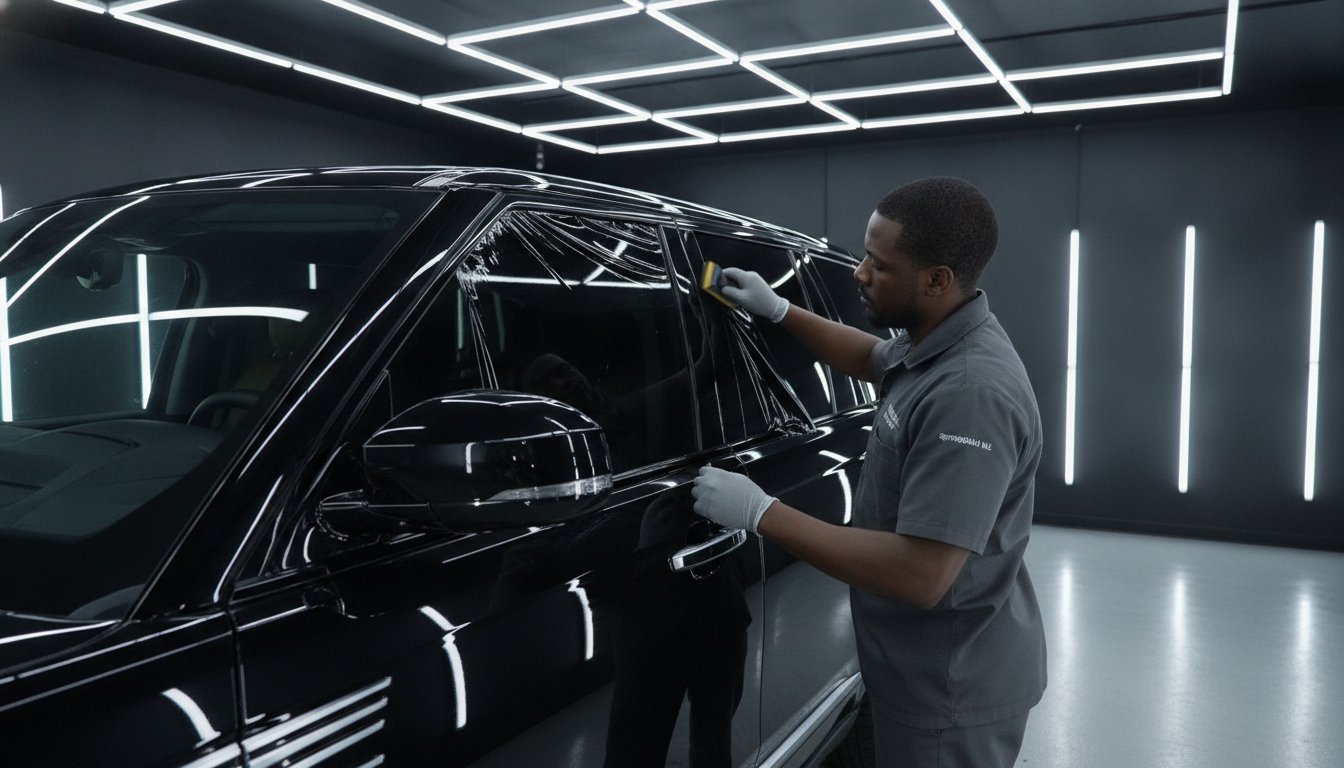
NJ Tint Laws 2026: The Complete Guide to Legal Window Tinting in New Jersey
With over 45,000 tint-related citations issued annually in New Jersey, a single aesthetic choice can quickly transform into a mandatory fine of up to $200. It's frustrating to invest in a premium vehicle only to face strict regulations that seem to limit your comfort, privacy, and long-term preservation. You likely understand the necessity of shielding your fine leather upholstery from UV damage and keeping the cabin cool during a humid July; yet, the fear of a non-negotiable ticket often leads to hesitation. New Jersey's enforcement is famously rigorous, and unlike other states, there's typically no "fix-it" option to avoid the penalty once you're pulled over.
We believe that compliance shouldn't mean compromising on the elite driving experience you deserve. This guide will help you navigate the nuances of nj tint laws with absolute confidence, ensuring your property remains both legal and elegantly protected. You'll discover the specific VLT limits for sedans versus SUVs, the 48-month renewal process for medical exemptions, and how advanced ceramic films provide superior heat rejection while staying within the state's rigorous standards. We've compiled everything you need to know to achieve a flawless result that satisfies both your aesthetic standards and the local statutes.
Key Takeaways
- Master the 2026 nj tint laws to distinguish between permissible rear window darkness and the strict "no-tint" regulations for front side windows and windshields.
- Identify the legal differences between sedans and multi-purpose vehicles to ensure your SUV or van remains fully compliant while maximizing passenger privacy.
- Navigate the specific NJ MVC requirements for medical exemptions, including the necessary certifications for conditions like lupus or photosensitivity.
- Learn how premium ceramic films offer exceptional heat and UV rejection without exceeding legal darkness limits, preserving both your comfort and your upholstery.
- Understand the importance of a meticulous, professional installation to protect sensitive vehicle electronics and guarantee a flawless, bubble-free finish.
Understanding NJ Tint Laws: What is Legally Permissible in 2026?
Owning a high-end vehicle in the Garden State requires a delicate balance between personal privacy and legal compliance. The nj tint laws are some of the most stringent in the country, designed with a primary focus on officer safety and driver visibility. Understanding these regulations is the first step toward a vehicle that looks exceptional without attracting unwanted legal attention or expensive citations. New Jersey's enforcement is famously rigorous, and it's essential to realize that the state rarely offers a "fix-it" ticket; once a violation is recorded, the fine is typically mandatory.
Visible Light Transmission, or VLT, is the percentage of light that passes through both the film and the glass. While modern Window Film Technology has advanced significantly, the legal measurement remains binary and precise. New Jersey law enforcement officers use calibrated tint meters to calculate this percentage by sliding a device over the edge of a partially rolled-down window. Any aftermarket film applied to the windshield or the front side windows is technically prohibited if it reduces light transmission, as these windows must remain essentially clear for the driver to be visible from the exterior.
It's also vital to distinguish between factory-dyed glass and aftermarket window film. Many luxury SUVs arrive from the manufacturer with "privacy glass" on the rear windows, where the pigment is inside the glass itself. This is legal because it meets federal safety standards at the time of production. However, applying a separate film to a sedan's rear windows is a different matter. Under current 2026 statutes, aftermarket tint is not permitted on any windows of a passenger car, though multipurpose vehicles like SUVs and vans enjoy much more flexibility on their rear glass.
VLT Percentages: The Numbers You Need to Know
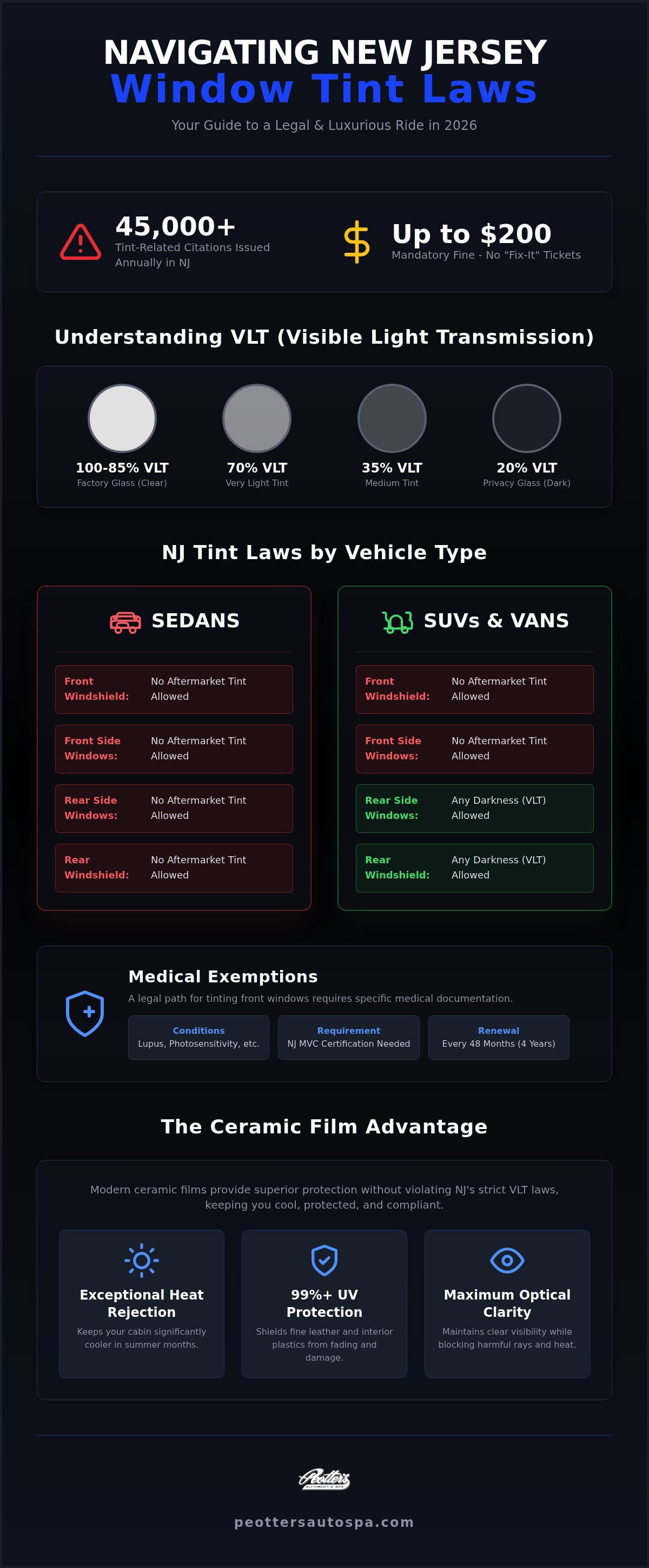
Visualizing 70% vs 20% VLT is essential for setting expectations. A 70% VLT film is virtually transparent to the naked eye, appearing as clear glass with a slight, sophisticated sheen. In contrast, a 20% VLT film is significantly darker, often referred to as privacy glass, which obscures the cabin's interior. Even if a window appears completely clear, it rarely sits at 100% VLT; factory glass typically measures between 75% and 85% due to the natural density of the materials used in modern automotive manufacturing.
Enforcement in New Jersey: What to Expect
Authorities in Springfield and the New Jersey State Police treat nj tint laws with a high degree of scrutiny. A dark front window is often used as the primary reason for a traffic stop, leading to a first-offense fine that typically ranges between $100 and $200. You should also be aware of Assembly Bill A4673. This legislation seeks to formally incorporate window tint inspections into the state's vehicle inspection process, meaning an illegal installation could soon result in an automatic "R" sticker and a failed inspection.
VLT Rules for Sedans vs. SUVs and Vans
The distinction between a passenger sedan and a multi-purpose vehicle is the most critical factor in determining your vehicle's legal profile. New Jersey statutes apply different standards based on how the Motor Vehicle Commission (MVC) classifies your property. While the desire for a cohesive, dark aesthetic is universal, achieving that look requires a strategic approach that respects these specific boundaries. By identifying your vehicle’s specific classification, you ensure that every application of film serves as a long-term asset rather than a legal liability.
According to the IWFA State Tinting Laws, these distinctions are critical for maintaining compliance across different state lines, especially in a region as strictly regulated as the Northeast. New Jersey remains one of the few states where the "no-tint" rule for front windows is absolute, regardless of the vehicle's body style. However, the flexibility granted to the rear half of the vehicle varies significantly between a standard four-door sedan and a larger SUV or van.
Sedan Tinting Limits
For those driving a traditional passenger car, the 2026 nj tint laws remain exceptionally restrictive. Aftermarket film is strictly prohibited on the windshield and both front side windows. Perhaps most surprisingly for many owners, the verified standard for 2026 indicates that no aftermarket tint is permitted on the rear side windows or the rear windshield of a passenger sedan. This mandate ensures total transparency for law enforcement, though it places a higher premium on using clear ceramic films that reject heat without adding visible pigment.
SUV and Multi-Purpose Vehicle Limits
If your vehicle is classified as a multi-purpose vehicle (MPV), such as an SUV, van, or crossover, you enjoy a much broader range of creative freedom. While the front side windows must remain clear of aftermarket film to stay compliant with nj tint laws, any level of darkness is permissible on the rear side windows and the rear windshield. This allow owners to achieve maximum privacy and thermal protection for rear passengers, creating a sanctuary-like environment for families and luxury commuters alike.
Regardless of your vehicle type, New Jersey mandates the use of dual side mirrors if any level of tint is applied to the rear glass. This safety requirement ensures that your outward visibility remains uncompromised even when the rear windshield is obscured. Additionally, mirrored or metallic films are universally banned across the state. These reflective surfaces can create dangerous glare for other motorists, undermining the sophisticated and understated appearance that premium films are intended to provide. If you are uncertain about your vehicle's specific classification, consulting with a specialist in premium window tint can provide the clarity needed for a worry-free installation.
Navigating NJ Medical Exemptions for Window Sunscreening
For drivers managing chronic medical conditions, the rigid boundaries of nj tint laws offer a necessary and life-enhancing exception. Conditions such as Lupus, light-sensitive migraine syndromes, and various forms of photosensitivity can make standard automotive glass insufficient for safe or comfortable travel. However, it's a common misconception that a simple physician's letter in your glove box will prevent a citation during a traffic stop. New Jersey requires a formal, state-sanctioned administrative process to legalize sunscreening film on windows that are otherwise restricted. This ensures your medical necessity is documented and recognized by law enforcement and state inspection stations.
The New Jersey Motor Vehicle Commission (MVC) acts as the sole gatekeeper for these exemptions. Without their official seal of approval, even the most legitimate medical need won't protect you from the mandatory fines associated with illegal tint. This rigorous oversight maintains a balance between the safety of law enforcement officers and the health requirements of the driver. By securing a formal exemption, you gain the peace of mind that your vehicle is a safe sanctuary, fully compliant with state regulations and tailored to your specific physical needs.
The Step-by-Step Application Process
The path to a legal medical exemption is methodical and requires precise documentation. First, you must request the official Sunscreening 1 application form directly from the NJ MVC. Your medical specialist must then certify the specific condition and provide a formal prescription detailing the necessity for window film. Once the MVC processes your request, you'll receive a 60-day temporary approval and an installation form. This temporary window allows you to have the work completed by a professional who understands the exact technical specifications required by the state.
Installation and Final Certification
Precision during the installation phase is paramount for long-term compliance. To maintain the validity of your exemption, you must have the film applied at a licensed NJ sunscreening facility that can provide the necessary certification of the work performed. This isn't a permanent approval; New Jersey mandates a 48-month renewal cycle to keep your legal status current and valid. You must store your permanent approval document safely within the vehicle at all times. Your permanent approval document must be presented during every vehicle inspection.
This administrative rigor protects both the driver and the integrity of the state’s safety standards. By following this protocol, you transform a medical necessity into a permanent, legal enhancement of your driving environment. It’s a sophisticated solution for those who require an extra layer of defense against the sun's rays while maintaining a polished, law-abiding presence on the road. Navigating the nuances of nj tint laws through the proper channels ensures your property remains an asset to your health and your lifestyle.
Heat Rejection Without Darkness: The Ceramic Film Advantage
Many enthusiasts assume that a darker window is the only way to combat the intense NJ summer heat. This is a common misconception that often leads to unnecessary legal risk under nj tint laws. In reality, the thermal performance of a film is determined by its technical composition, not its pigment density. Premium ceramic films utilize advanced nano-ceramic particles to filter out specific wavelengths of solar energy, allowing you to maintain a legally compliant, transparent aesthetic while enjoying the cooling benefits typically associated with much darker tints. This technology offers a perfect marriage of clarity, comfort, and compliance.
Infrared (IR) rays are the primary source of the burning sensation you feel on your skin during a long afternoon drive. While traditional dyed films merely shade the interior, ceramic technology actively rejects up to 98% of these IR rays. This scientific approach creates a sanctuary of comfort that preserves the pristine condition of your vehicle’s cabin. You can achieve 99% UV protection with films that are virtually invisible to the naked eye, ensuring your health and your property remain shielded without altering the vehicle's sophisticated factory profile or attracting unwanted attention.
Why Ceramic Tint is the Gold Standard
Standard dyed films often fade to a distracting purple hue over time, while metallic films can interfere with your vehicle’s GPS, cellular, and radio signals. Ceramic films avoid these pitfalls entirely, offering long-term color stability and total signal clarity for your sensitive on-board electronics. By significantly reducing the heat entering the cabin, you lower the load on your air conditioning system, which improves fuel efficiency and extends the life of your luxury HVAC components. For a deeper look at these technical differences, explore our comparison of Ceramic Tint vs Regular Tint.
Protecting Your Investment
The New Jersey sun is relentless on luxury interiors, often causing fine leather to crack, wood trim to bleach, and dashboards to warp. Applying a high-performance ceramic film acts as a permanent, invisible sunscreen for your investment, maintaining the "new car" luster that defines a truly well-kept vehicle. Beyond aesthetics, these films provide an added layer of safety by increasing the shatter resistance of your glass and reducing fatiguing glare during night driving. This level of care is a core component of our Total Vehicle Preservation Guide, which outlines how to keep your car in showroom condition for years to come.
If you're ready to experience first-class solar protection that respects the boundaries of nj tint laws, we invite you to schedule a professional window tint consultation and discover the Peotter’s difference for yourself.
The Peotter’s Standard: Professional Tinting in Springfield, NJ
Choosing a facility for your vehicle’s window film is a decision that extends far beyond a simple price point. In an era where luxury cars are equipped with sophisticated sensors and high-tech glass, the precision of the application is paramount. A poor installation can lead to more than just unsightly bubbles; it can interfere with on-board electronics or damage the delicate defroster lines on your rear windshield. At Peotter’s Auto Spa, we treat every vehicle as a significant investment, applying a meticulous standard of care that ensures your property remains flawless and fully compliant with nj tint laws.
Our Springfield facility is designed to provide a "white-glove" experience that mirrors the quality of the vehicles we service. We maintain a clean-room environment to prevent dust and contaminants from being trapped under the film, a common failure in high-volume shops. This controlled setting, combined with our expert installation techniques perfected since 1994, results in a finish that is indistinguishable from factory glass. We don't just apply film; we rejuvenate and preserve your vehicle's aesthetic value through a process that values quality over speed.
The process begins with a consultative approach. We help you navigate the complexities of nj tint laws, ensuring you understand exactly how to balance the privacy of rear windows with the strict transparency requirements for the front of the vehicle. For those seeking 360-degree preservation, we often recommend pairing your window film with Paint Protection Film. This combination shields your exterior from road debris while the ceramic tint guards your interior from solar damage, creating a total sanctuary of protection for your investment.
A Boutique Experience for Discerning Owners
Discerning owners in Springfield, Summit, and the greater Union County area trust us because we refuse to compromise on materials. Our commitment to excellence includes:
- The exclusive use of elite-grade films that are guaranteed not to bubble, peel, or turn purple over time.
- Expert assistance with the documentation and installation requirements for clients with medical exemptions.
- A specialized focus on luxury and exotic vehicles that require a higher level of technical skill.
Our goal is to act as your trusted advisor, providing the expert-level skill needed to maintain your vehicle's long-term resilience and visual perfection. We take pride in the "Peotter's Standard," which represents an uncompromising commitment to first-class results.
Ready to Enhance Your Vehicle?
A professional consultation offers far more value than a "quick-tint" shop can provide. We take the time to analyze your specific needs, whether you're focused on heat rejection, glare reduction, or interior preservation. The result is a transformative experience that enhances your comfort and elevates your vehicle’s profile without the fear of legal repercussions. It’s a sophisticated upgrade that pays dividends in both pride of ownership and resale value. Schedule your premium window tint consultation at Peotter's Auto Spa today and experience the pinnacle of automotive care.
Elevate Your Driving Experience with Legal Precision
Staying compliant with nj tint laws shouldn't feel like a compromise on your vehicle's comfort or aesthetic appeal. We've explored how ceramic film technology offers a sophisticated path forward, allowing you to reject nearly all infrared heat while maintaining the transparency required by state authorities. Whether you're navigating the specific documentation for a medical exemption or simply seeking the highest standard of interior preservation, the right approach combines legal awareness with elite craftsmanship. Achieving the perfect balance between protection, elegance, and peace of mind is entirely possible with the right specialist by your side.
At Peotter’s Auto Spa, we've been family-owned and operated in New Jersey since 1994, establishing ourselves as dedicated specialists in luxury automotive restoration. As an authorized installer of high-performance ceramic films, we offer the meticulous precision your vehicle deserves. Don't leave your property to chance with high-volume shops that lack the specialized skill required for exotic and high-end glass. Protect your investment with premium window tinting at Peotter's Auto Spa and enjoy the confidence of a perfectly protected cabin. Your vehicle is an extension of your lifestyle; treat it to the white-glove care it deserves.
Frequently Asked Questions
Is it legal to have 70% VLT tint on front windows in NJ?
No aftermarket film is permitted on the driver and front passenger side windows under current nj tint laws. While the legal standard requires a combined VLT of at least 70%, most luxury vehicles are manufactured with glass that is already near this limit. Adding any secondary film typically reduces the light transmission below the legal threshold, making the vehicle non-compliant and subject to citation.
Can I fail NJ inspection for window tint?
Yes, you can receive an "R" sticker and fail your state inspection if your vehicle is found to have illegal aftermarket film. With the 2026 introduction of Assembly Bill A4673, enforcement has become more formalized within the official inspection process. It's essential to ensure your installation meets all VLT standards before your visit to avoid the inconvenience of a mandatory re-inspection.
How do I get a medical exemption for window tint in New Jersey?
You must submit a formal Sunscreening 1 application to the NJ MVC along with a physician's certification for a qualifying condition like Lupus or photosensitivity. Once the state processes your request, you'll receive official documentation that must be kept in the vehicle at all times. Remember that these exemptions require a renewal every 48 months to remain valid and recognized by law enforcement.
What is the fine for illegal window tint in NJ in 2026?
A first-offense citation for illegal window tint typically results in a mandatory fine between $100 and $200. New Jersey does not generally offer "fix-it" tickets, meaning the penalty must be paid even if you remove the film immediately after the stop. Subsequent offenses are significantly more severe, and repeat violations can lead to fines reaching as high as $5,000 under the current statutes.
Are SUVs allowed to have darker tint than sedans in NJ?
Yes, vehicles classified as SUVs, vans, or multipurpose vehicles enjoy much more flexibility regarding their rear windows. While nj tint laws prohibit aftermarket tint on the rear side and back windows of passenger sedans, SUVs are permitted to have any VLT percentage on these specific windows. This distinction allows SUV owners to prioritize passenger privacy and maximum solar protection for the rear cargo and seating areas.
Does NJ allow 'Chameleon' or color-changing tint?
No, color-changing, mirrored, or highly reflective films are strictly prohibited on all New Jersey vehicles. The state also specifically bans red, amber, and yellow tints to prevent confusion with emergency vehicle lighting and to maintain optimal road safety. For a sophisticated look, we recommend high-performance ceramic films that provide a consistent, premium appearance without violating these strict optical and color standards.
Do I need dual side mirrors if I tint my back window?
Yes, New Jersey law requires your vehicle to be equipped with dual side mirrors if any tint is applied to the rear window. This ensures that you maintain an unobstructed view of the road behind you, even if the rear glass is significantly darkened. This safety requirement is a mandatory prerequisite for any legal rear-window installation on multipurpose vehicles or those operating under a medical exemption.
Can I tint my windshield with a clear film for UV protection?
No aftermarket tint is allowed on the windshield, regardless of how clear or transparent the film appears. The only exception is a non-reflective strip applied above the AS-1 line or within the top six inches of the glass. For those seeking comprehensive UV protection across the entire windshield, a formal medical exemption is the only legal pathway to apply protective film to the main viewing area.