Paint Protection Film vs. Clear Bra: Busting the Myths for 2026
The "clear bra" you remember from a decade ago is effectively extinct. If you're weighing the benefits of paint protection film vs clear bra, it's easy to feel overwhelmed by industry jargon or haunted by images of yellowing, cracked plastic on a luxury bumper. We understand that hesitation. Your vehicle is a significant investment, and the last thing you want is a protective layer that detracts from its flawless finish.
This guide promises to demystify these terms and show you how modern technology has replaced fragile plastics with high-performance, self-healing armor. You'll learn how advanced Aliphatic Thermoplastic Polyurethane (TPU) now offers unprecedented resilience against New Jersey road salt and debris while preserving up to 15% of your car's resale value. We will explore the critical differences between these eras of protection and explain why a meticulous, professional installation is the only way to achieve a truly invisible, elite result.
Key Takeaways
- Learn the definitive truth about paint protection film vs clear bra and why the industry has transitioned toward more advanced, technical terminology.
- Identify the critical differences between outdated PVC materials and modern Aliphatic TPU that prevent unsightly yellowing and cracking.
- Uncover the science of self-healing technology that allows your vehicle to shed swirl marks and light scratches through simple heat exposure.
- Understand the necessity of a controlled "clean room" environment for a professional installation that remains truly invisible to the naked eye.
- Gain confidence in protecting your automotive investment against the specific environmental rigors of New Jersey roads, from winter brine to highway debris.
The Linguistic Mystery: Is There a Real Difference Between PPF and Clear Bra?
The confusion surrounding paint protection film vs clear bra often stems from a generational gap in automotive care. To answer the most common question: yes, they are technically the same product. However, the names represent two entirely different eras of technology and application philosophy. While one suggests a temporary accessory, the other defines a permanent, high-tech preservation system designed for the discerning owner. Understanding this linguistic shift is the first step toward appreciating the elite level of protection available for your vehicle today.
Where Did the Term "Clear Bra" Come From?
During the 1980s and 90s, the "car bra" was a ubiquitous sight on American highways. These were heavy, black vinyl covers designed to shield the front end from debris. Unfortunately, they were fundamentally flawed; they trapped moisture and grit against the clear coat, often causing more damage than they prevented. When the first transparent urethane films emerged, consumers naturally dubbed them "clear bras" because they served the same protective purpose without the aesthetic compromise. The nickname stuck, even as the materials evolved from thick, yellowing plastics into the sophisticated membranes we utilize today. It’s a consumer-friendly term for a revolutionary idea, but it fails to capture the complexity of modern engineering.
Why Professionals Prefer the Term "Paint Protection Film"
Elite specialists and master craftsmen almost exclusively use the technical term: Paint protection film (PPF). This shift in language isn't just about sounding more professional; it accurately describes the material’s chemical composition and its expanded role in vehicle care. Modern films are no longer just a physical barrier for the bumper. They are advanced, multi-layered coating systems that provide comprehensive defense for every painted surface.
The transition to the term PPF also reflects the move from "front-end only" protection to full-body coverage. Today's enthusiasts don't just want to stop rock chips on the hood; they want to preserve the entire vehicle's luster. Modern paint protection film is an engineered polyurethane system that bonds with the surface to provide a flawless finish. This precision ensures your vehicle remains in showroom condition, regardless of the miles traveled. When you choose PPF, you're investing in a durable, optically clear defense that enhances paint depth while providing long-term resilience against the elements.
From PVC to TPU: The Technical Evolution of the "Bra"
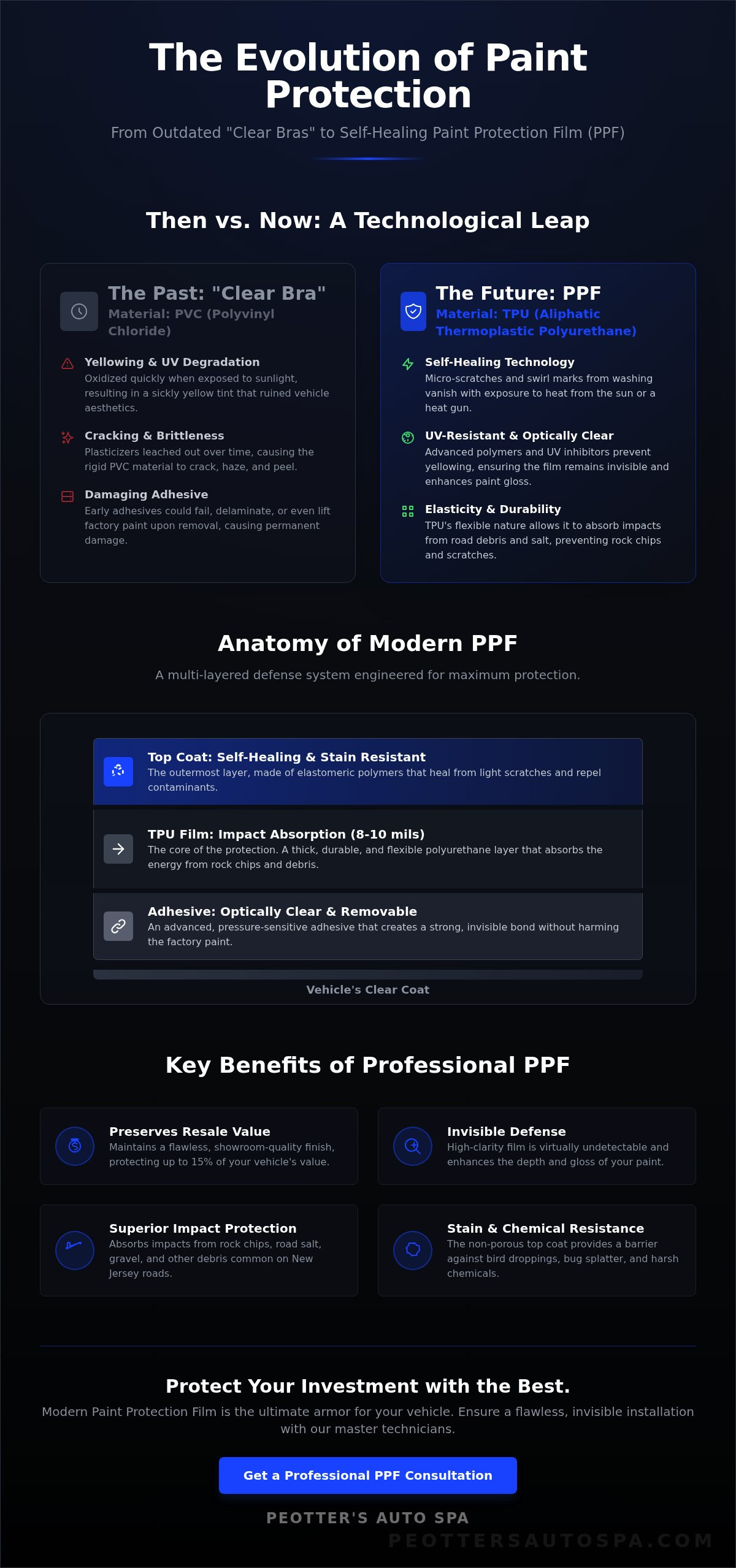
The chemical composition of your vehicle's defense has undergone a radical transformation over the last decade. When enthusiasts discuss paint protection film vs clear bra, they are often unknowingly comparing two distinct chemical eras. The first generation of "clear bras" relied on Polyvinyl Chloride (PVC). This material was rigid, difficult to install, and fundamentally unstable when exposed to the elements. In contrast, the 2026 industry standard utilizes Aliphatic Thermoplastic Polyurethane (TPU). This advanced polymer is engineered for high-level performance, long-term resilience, and flawless aesthetics.
The Problem with Early Generation Clear Bras
Early protective films were essentially glorified stickers that lacked the sophisticated molecular architecture required for automotive preservation. Because PVC is naturally brittle, manufacturers added plasticizers to make it pliable. These chemicals eventually leached out, leaving the film prone to cracking and a textured "orange peel" appearance that marred the vehicle's lines. UV degradation was another significant hurdle; without modern inhibitors, these films would oxidize and turn a sickly yellow within months. Edmunds has often noted that while early iterations were a gamble, the evolution of these materials has fundamentally changed the value proposition for modern car owners. Poor adhesive technology also meant that removal often resulted in delamination or even lifting the factory paint, a risk that no longer exists with elite-tier TPU systems.
The 2026 Standard: Multi-Layered Protection
Modern TPU is a marvel of material science. Its molecular structure is "elastic," meaning it can stretch and return to its original shape without losing structural integrity. In 2026, the standard thickness for high-impact areas has increased to 8-10 mils, providing a substantial cushion against the debris found on the Garden State Parkway. This protection is delivered through a sophisticated three-layer system:
- The Adhesive Layer: A high-clarity, pressure-sensitive acrylic that bonds securely without damaging the clear coat.
- The TPU Core: The powerhouse of the film, providing impact resistance, UV filtration, and extreme flexibility.
- The Proprietary Top-Coat: A high-density layer that resists environmental staining and integrates hydrophobic properties directly into the surface.
This multi-layered approach ensures that your vehicle doesn't just stay protected; it stays beautiful. The film is now so optically clear and thin that it becomes a second skin, virtually invisible to the naked eye. If you are looking to elevate your vehicle's defense, our paint protection film packages offer the perfect marriage of science and craftsmanship. By choosing a TPU-based system, you're investing in a shield that repels water, resists road salt, and maintains a deep, mirror-like gloss for years to come.
Busting the Top 3 Myths About Modern Clear Bras
Skepticism is a natural byproduct of past experiences. Many vehicle owners still associate "clear bras" with the unsightly, yellowed, and peeling films seen on cars from the early 2000s. However, the debate regarding paint protection film vs clear bra has shifted entirely due to massive leaps in polymer science. When you choose an elite specialist, the common fears of the past become irrelevant. We believe in providing absolute clarity, ensuring you feel confident that your investment is being enhanced, not compromised.
The Truth About Yellowing and UV Resistance
The most persistent myth is that a film will eventually turn a white or silver car yellow. In the past, this was a legitimate concern caused by UV radiation breaking down the low-grade adhesives and PVC materials. Modern Aliphatic TPU is inherently stable. Scientific advancements documented in the Journal of Coatings Technology and Research highlight how modern polyurethane films utilize sophisticated UV inhibitors that are integrated throughout the entire TPU core. This means the film doesn't just have a protective "sunscreen" layer; it is chemically resistant to oxidation from the inside out. In New Jersey, where temperature swings and intense summer sun are standard, this UV stability ensures your film remains optically clear for its entire lifespan.
Edge Clarity and Seamless Installation
Another common fear is that the edges of the film will be visible, collecting dirt and creating a "seam line" across the hood. This isn't a failure of the product, but rather a limitation of low-end installation methods. Many high-volume shops use "pre-cut kits" that stop just short of the panel edges to save time. At Peotter’s Auto Spa, we utilize custom-wrapped edges whenever possible. We meticulously tuck the film behind the panels, around the emblems, and into the gaps. This master craftsman approach ensures that the "invisible" promise of a clear bra is finally a reality in 2026. The result is a seamless, deep gloss that leaves onlookers wondering if there is any film on the car at all.
Safe Preservation and Removal
The final hurdle for many is the fear of paint damage during removal. It's a common misconception that the adhesive will "bond" too strongly and pull up the clear coat if the film is ever replaced. Modern adhesives are engineered to be pressure-sensitive and semi-permanent. They provide a robust bond that withstands high-speed debris and New Jersey road salt, yet they remain pliable enough for safe removal by a professional. When the time comes to refresh the film, it peels away cleanly, revealing factory-perfect paint that has been frozen in time. By trusting a dedicated specialist, you ensure that the removal process is just as precise and safe as the initial application.
Modern PPF Performance: Beyond a Physical Barrier
Modern performance has evolved far beyond the basic shielding offered by the original "clear bra." When comparing paint protection film vs clear bra in 2026, the most striking difference lies in the film's active performance. It's no longer a passive plastic sheet; it's a dynamic, responsive layer that maintains your vehicle's aesthetic perfection automatically. This high-tech membrane serves as a sacrificial barrier that doesn't just block damage; it absorbs and neutralizes it. It provides a level of security that was simply impossible with previous generations of technology.
The Science of Self-Healing TPU
At the heart of our self healing ppf is the use of shape memory polymers. These molecules are engineered to return to their original, smooth state after being disturbed by light abrasions or car wash swirl marks. This process eliminates the constant need for paint correction to maintain a deep, flawless gloss. You'll find that heat, not chemicals, is the catalyst for this film repair. A few minutes in the afternoon sun or a splash of warm water is enough to watch surface imperfections vanish. This technology ensures your car looks freshly detailed every single day without the labor of traditional polishing. It's a self-sustaining system of beauty and resilience.
Hydrophobicity and Maintenance
New Jersey driving presents a unique set of hazards that demand more than just a physical mask. From corrosive winter brine to acidic bird droppings and sticky tree sap, your paint is under constant assault. Modern PPF acts as a high-density shock absorber, dissipating the energy of stone chips before they can reach the factory clear coat. This elasticity prevents the paint from fracturing under impact. The chemical resilience of modern TPU is equally impressive. The top-coat is designed with a high cross-link density, which prevents acidic contaminants from penetrating the film. This means contaminants that would typically etch your clear coat in hours can be safely wiped away.
Additionally, these films now feature integrated hydrophobic properties that mirror the performance of a premium ceramic coating. This surface tension causes water to bead and roll away, carrying road grime and salt with it. Maintaining your vehicle's appearance becomes an effortless task when you understand the advantages of paint protection film vs clear bra technology. A protected vehicle stays cleaner for significantly longer periods, simplifying your routine while providing uncompromising defense. You can preserve your vehicle's showroom shine by investing in our professional protection services.
Professional Installation: Why the Craft Matters in Springfield, NJ
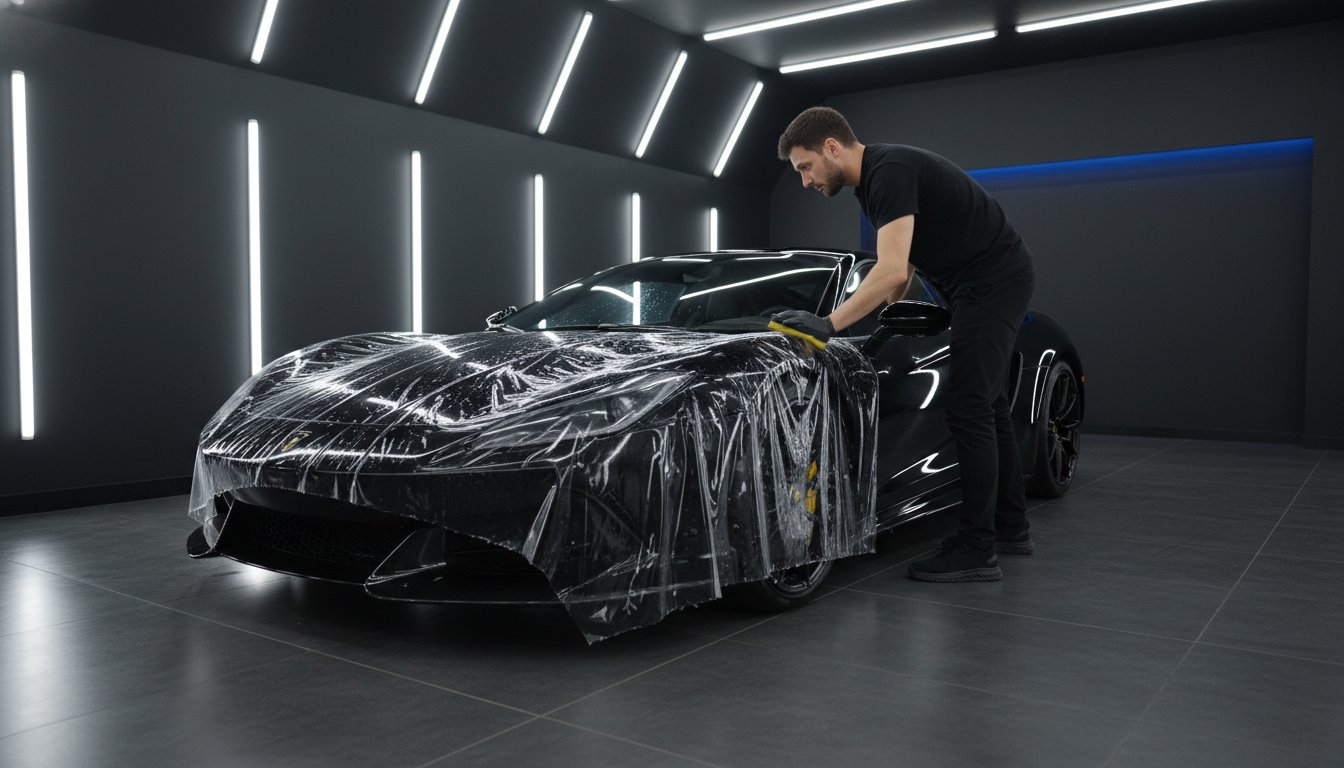
The technical debate between paint protection film vs clear bra eventually leads to a single, inescapable truth: the quality of the installation defines the longevity of the result. While the chemistry of the film has evolved, the physical requirements for a flawless application remain uncompromising. This is not a project for a home garage or a high-volume mobile service. Achieving a truly invisible, factory-perfect finish requires a controlled "clean room" environment where temperature, humidity, and airborne particulates are meticulously managed. Without these sterile conditions, even the world's finest film will trap dust and debris, compromising both the aesthetic and the bond to your vehicle's surface.
Springfield drivers face a unique set of environmental challenges that make professional-grade defense a necessity rather than a luxury. The high-speed debris of the Garden State Parkway and the corrosive winter brine used on local roads can devastate an unprotected clear coat in a single season. Before we apply a single inch of film, we perform a comprehensive paint correction in Union County, NJ to ensure the surface is entirely free of swirl marks, oxidation, and contaminants. This preparation ensures that the film bonds at a molecular level, locking in a flawless shine that remains resilient against the elements.
Environmental Factors for Springfield Drivers
The local climate plays a significant role in how your protection performs over time. New Jersey's dramatic humidity shifts and temperature swings can affect the curing process of the adhesive. A local Springfield specialist understands these variables, ensuring the film is applied under optimal conditions for long-term stability. Beyond the initial application, having a dedicated expert nearby allows for periodic maintenance checks. These inspections ensure the edges remain sealed and the hydrophobic properties continue to repel the oils and road grime common to our region.
The Peotter’s Standard: White-Glove Execution
At Peotter’s Auto Spa, we treat every vehicle as a masterwork of engineering. Our preparation process is exhaustive, involving multi-stage decontamination and surface perfection that exceeds industry norms. We specialize in custom-tailored applications, meticulously hand-trimming and tucking film around the complex curves of exotic and luxury vehicles. When you weigh the benefits of paint protection film vs clear bra, the decision ultimately rests on who you trust to handle your investment. We provide the quiet confidence that comes from elite craftsmanship and an uncompromising commitment to perfection. Schedule your consultation for elite paint protection today.
Elevate Your Vehicle’s Standard of Protection
The transition from the traditional "clear bra" to modern, high-performance films represents a significant leap in automotive preservation. You now have the power to shield your investment with self-healing membranes that actively repair themselves while repelling the harshest environmental contaminants. Understanding the nuances of paint protection film vs clear bra technology ensures you aren't just buying a product; you're investing in long-term resilience and a flawless showroom shine. The era of yellowing, brittle plastics is over, replaced by optically clear TPU that remains virtually invisible to the naked eye.
At Peotter’s Auto Spa, we've been the trusted guardians of luxury vehicles since 1994. Our family-owned, specialized Springfield facility is engineered to deliver white-glove execution through elite TPU film technology and meticulous preparation. We invite you to experience the peace of mind that comes from true master craftsmanship and an uncompromising dedication to detail. Protect your investment with the meticulous masters at Peotter’s Auto Spa and ensure your vehicle remains a source of pride for years to come.
Frequently Asked Questions
Is clear bra the same as paint protection film (PPF)?
Yes, clear bra is simply a consumer-friendly nickname for paint protection film (PPF). While the terms are used interchangeably, the technical industry standard is PPF. This distinction is important because modern technology has evolved significantly from the early versions. When comparing paint protection film vs clear bra, the latter often refers to the older era of protection, while PPF represents the advanced, self-healing TPU systems we utilize today.
Can you see the clear bra on a car?
A professional installation should be virtually invisible to the naked eye. By utilizing custom-wrapped edges and meticulous trimming techniques, our specialists ensure the film contours perfectly to every panel. The high-gloss finish of modern film is designed to match your factory clear coat flawlessly. This precision preserves the vehicle's aesthetic lines while providing an imperceptible layer of elite defense that remains hidden from onlookers.
How long does modern paint protection film last in NJ?
High-quality paint protection film typically lasts between seven and ten years when maintained with proper care. In the demanding New Jersey climate, factors like winter road salt and high humidity can impact longevity, but modern TPU is engineered for long-term resilience. Regular maintenance checks at our specialized Springfield facility ensure the film continues to provide a flawless, durable barrier against the elements for the duration of its lifespan.
Does clear bra yellow over time on white cars?
Modern Aliphatic TPU films are engineered with integrated UV inhibitors that prevent oxidation and discoloration. Unlike the outdated PVC films of the past, these advanced polymers remain optically clear even when exposed to intense solar radiation. This chemical stability ensures that white and silver vehicles maintain their pristine, factory-fresh appearance. You can drive with confidence knowing your vehicle's luster is protected from the unsightly yellowing that once plagued the industry.
Can I wash my car normally with PPF installed?
You can continue to wash your vehicle normally, though we recommend utilizing touchless or hand-wash methods for the best results. It is important to avoid pointing high-pressure water jets directly at the edges of the film to prevent any potential lifting. The hydrophobic properties of modern film actually make the cleaning process easier. Road grime and debris are less likely to bond to the surface, allowing for a faster and safer wash.
Is it worth getting a clear bra on a leased vehicle?
Applying a protective film to a leased vehicle is a prudent strategy to avoid costly "excessive wear and tear" fees during turn-in. Since the film preserves the factory paint from rock chips and environmental etching, it ensures the car remains in exceptional condition. This proactive approach provides peace of mind throughout your lease term. It allows you to enjoy the drive without fearing the financial penalties of daily road hazards.
What happens if the paint protection film gets scratched?
Minor surface scratches and swirl marks will automatically disappear when the film is exposed to heat from the sun or warm water. This "self-healing" capability is a result of the shape-memory polymers within the TPU core. For deeper impacts that exceed the film's threshold, the layer acts as a sacrificial barrier. This ensures the expensive factory paint underneath remains untouched, even if the film itself eventually requires a professional refresh.
Can I apply ceramic coating over my clear bra?
Yes, applying a ceramic coating over your film is a highly recommended "hybrid" approach to automotive preservation. This combination enhances the film's hydrophobic properties, adds a deeper level of mirror-like gloss, and makes the surface even easier to clean. By layering these technologies, you create a comprehensive defense system. This provides both the physical impact resistance of the film and the elite chemical protection of a ceramic coating.