Protect Your Car From Road Salt in NJ: The 2026 Winter Preservation Guide
Driving through a New Jersey winter without professional-grade surface protection isn't just a gamble; it's a slow-motion invitation for magnesium chloride to dismantle your vehicle's integrity. You likely already know the frustration of seeing that stubborn, white salt crusting on your paint after a single trip down I-95, and you're right to seek a better way to protect car from road salt NJ. It's a common fear for many Garden State drivers that the "rust belt" reputation will eventually claim their vehicle's resale value, especially when standard automatic car washes fail to reach the hidden crevices where corrosion truly begins.
You deserve the peace of mind that comes with knowing your investment is shielded by more than just a temporary wax. This guide provides a clear path toward elite, proactive preservation that safeguards your car's finish and long-term value. We'll explore the sophisticated science of Paint Protection Film (PPF), the long-term resilience of ceramic coatings, and a meticulous maintenance schedule designed to keep your vehicle's exterior flawless, resilient, and stunning throughout the harshest months of 2026.
Key Takeaways
- Neutralize the corrosive effects of NJ's specialized liquid brine by understanding how its adhesive properties penetrate body seams and accelerate oxidation.
- Identify the high-impact "splash zones" and wheel surfaces most vulnerable to salt pitting to better protect car from road salt NJ this winter.
- Evaluate the distinct protective roles of Paint Protection Film and Ceramic Coatings as essential physical and chemical barriers against seasonal damage.
- Establish a professional-grade maintenance schedule featuring pre-season paint correction and strategic washing techniques to maintain a flawless exterior finish.
- Learn how a master craftsman’s approach to vehicle preservation can safeguard your car’s resale value against the regional "rust belt" depreciation.
The Chemistry of Corrosion: Why NJ Road Salt Destroys Finishes
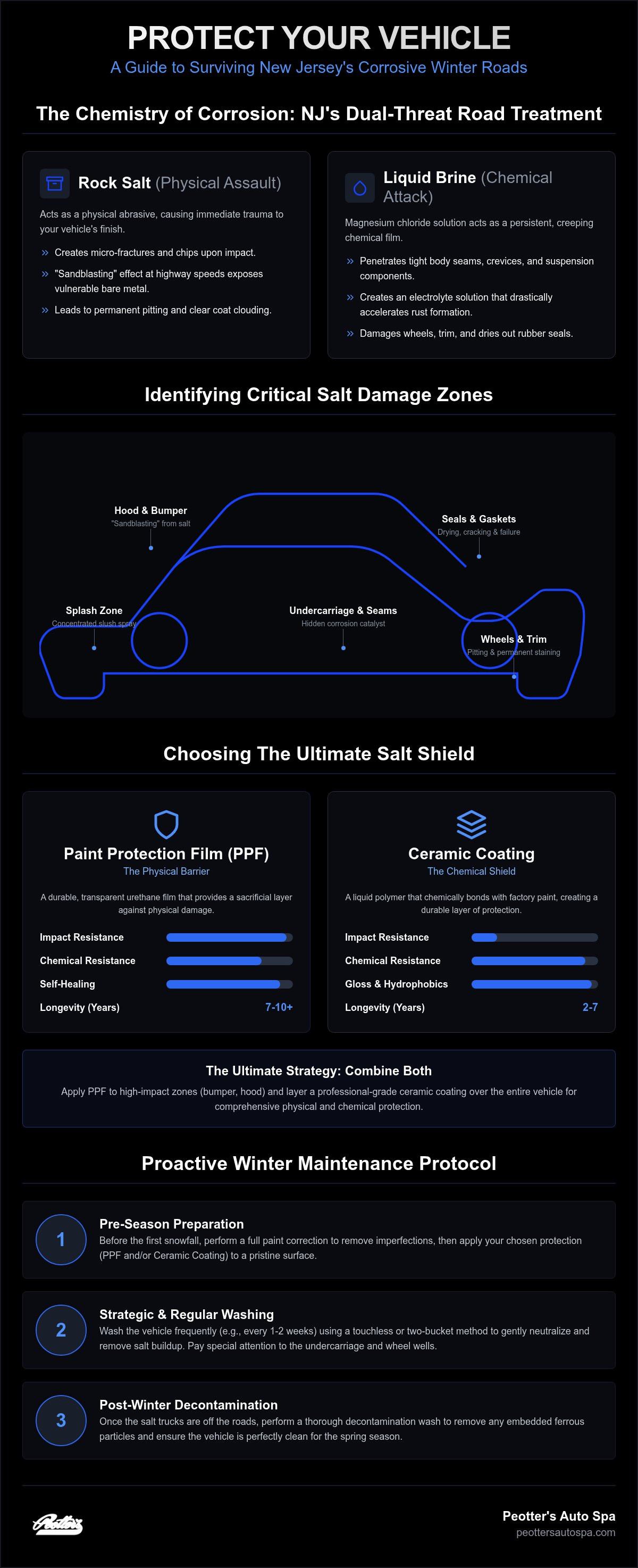
The New Jersey Department of Transportation employs a sophisticated, dual-threat approach to winter road safety: traditional rock salt and liquid brine. While effective for traction, this combination creates a hostile environment for your vehicle’s exterior. Rock salt provides the initial abrasive force, while the liquid brine, often a magnesium chloride solution, acts as a persistent chemical film. This brine is particularly insidious because it atomizes into a fine mist as you drive. It doesn't just sit on the surface; it penetrates the tightest body seams, suspension components, and crevices where standard cleaning cannot reach. To truly protect car from road salt NJ owners must understand that this isn't just surface dirt; it's a chemical catalyst for structural decay.
The destruction occurs through a relentless electrochemical reaction. When salt dissolves in water, it creates an electrolyte solution that facilitates the rapid flow of electrons between the metal of your car and the surrounding oxygen. This process accelerates the formation of iron oxide, or rust, at an alarming rate. Modern factory clear coats are engineered for high gloss but are often thinner and more porous than those of previous decades. This increased vulnerability leads to accelerated etching, permanent dullness, and a compromised aesthetic that no simple wash can fully restore.
Rock Salt vs. Liquid Brine
Rock salt causes immediate, physical trauma to your vehicle's finish. Each granule acts like a projectile, creating micro-fractures and stone chips that expose the vulnerable bare metal beneath. In contrast, liquid brine acts as a surfactant. It lowers the surface tension of water, allowing the corrosive solution to "creep" into hidden areas like door bottoms, fuel doors, and behind trim pieces. New Jersey’s frequent freeze-thaw cycles worsen the damage. As the solution enters a crevice and freezes, it expands, widening the gap and allowing even more salt to enter during the next melt. This cycle of expansion and chemical attack is what leads to the bubbling paint often seen on older regional vehicles.
The Hidden Cost of Winter Depreciation
Preserving your vehicle's aesthetic integrity is a direct investment in its future market value. In the Northeast secondary market, the "rust-free" designation is the single most influential factor for discerning buyers and collectors. A luxury vehicle that shows signs of a "winter-beaten" life, such as clouded trim, pitted wheels, or oxidised undercarriage components, suggests a lack of meticulous care. This psychological impact often leads to significantly lower offers and extended time on the market. By choosing to protect car from road salt NJ residents ensure their property remains a pristine asset, maintaining its allure, its performance, and its ultimate resale value.
Beyond the Undercarriage: Identifying Critical Salt Damage Zones
While many owners focus solely on the chassis, the most visible destruction often occurs in plain sight. The "Splash Zone"-comprising the lower rocker panels and wheel arches-receives a concentrated bombardment of magnesium chloride slush. This slurry clings to the surface, creating a constant chemical attack on the finish. On high-speed arteries like I-78 and the Garden State Parkway, your vehicle's leading edges suffer a relentless "sandblasting" effect as salt-spreaders discharge granules that impact hoods and bumpers at highway speeds. Identifying these zones is the first step to effectively protect car from road salt NJ.
Beyond the bodywork, salt is a silent predator for specialized finishes. Alloy wheels and expensive powder coatings are particularly susceptible to pitting, where salt eats through the protective layer and oxidizes the metal beneath. Similarly, rubber gaskets and window seals are often overlooked. Salt residues draw moisture out of these components, causing them to dry, crack, and lose their supple, factory-new seal. Even chrome or modern "black-out" trim can develop permanent staining if these residues are allowed to dwell, marring the sophisticated silhouette of your vehicle.
The Paint Finish: Micro-Pitting and Oxidation
Salt crystals are effectively micro-abrasives. When you attempt to wipe a salt-filmed car or even brush against it, these sharp-edged minerals create microscopic scratches in the clear coat. Over time, this leads to chemical etching where the salt permanently "clouds" the finish, robbing it of its depth and clarity. Standard waxes, which are often just thin organic films, provide almost zero resistance against the aggressive surfactants used in NJ road brine. To truly protect car from road salt NJ, a more resilient, high-performance barrier is required to maintain that showroom-level perfection.
The Undercarriage Myth
A common misconception is that a standard automatic car wash under-spray provides sufficient protection. In reality, these systems often lack the pressure or precision to flush out "trapped salt" from drain holes and deep chassis cavities. Liquid brine is designed to be "sticky," and a cursory rinse often leaves a corrosive film behind. At Peotter’s Auto Spa, we view vehicle preservation as a comprehensive discipline rather than a simple cleaning task. True protection involves neutralizing these hidden threats before they take hold. For those seeking a professional standard of care, our paint correction services can restore clarity and brilliance before applying long-term defensive layers.
PPF vs. Ceramic Coating: Choosing the Ultimate Salt Shield
Choosing the right defense for your vehicle's finish requires a strategic understanding of both physical and chemical threats. While traditional waxes melt away under the pressure of New Jersey’s magnesium chloride treatments, professional-grade barriers offer a permanent, sophisticated solution. To truly protect car from road salt NJ, owners typically choose between two elite technologies: Paint Protection Film (PPF) and Ceramic Coating. While each provides exceptional benefits, they serve distinct roles in your vehicle’s winter preservation strategy. A meticulous approach involves selecting the right tool for the specific environmental challenges your car will face on the road.
Paint Protection Film (PPF) as Armor
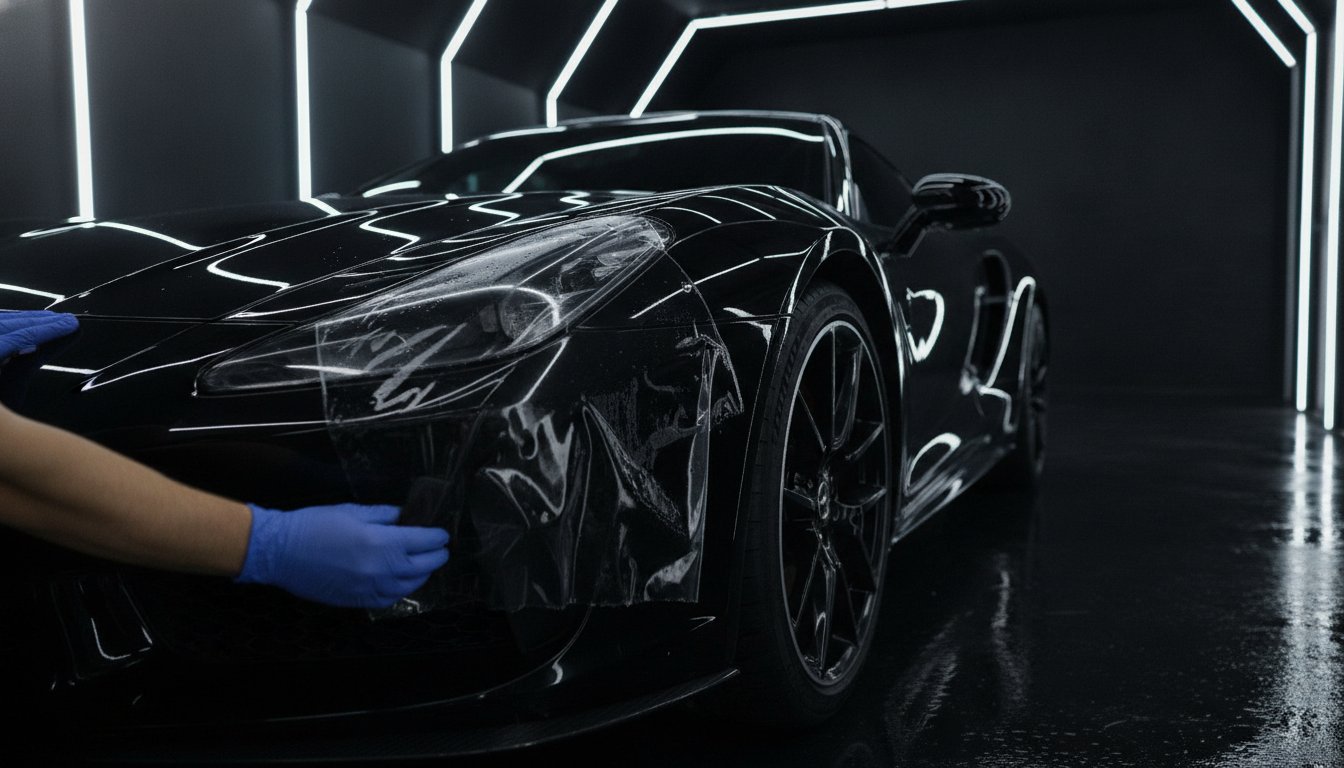
Think of Paint Protection Film as a transparent, high-performance shield for your car’s most vulnerable surfaces. This thick, urethane layer acts as a sacrificial barrier that prevents salt granules and road debris from ever making contact with your factory paint. It is essential for high-impact zones such as the front bumper, hood, and side mirrors, which face constant "sandblasting" on the Parkway. One of the most remarkable features of modern PPF is its self-healing capability. Micro-scratches caused by winter snow brushes or abrasive salt crusts simply vanish when exposed to heat, maintaining a flawless aesthetic throughout the season. For a deeper look at this technology, explore The Ultimate Guide to Paint Protection Film.
Ceramic Coating as a Chemical Repellent
While PPF provides physical strength, Ceramic Coating offers an uncompromising chemical defense. This liquid polymer bonds with your vehicle’s clear coat, creating a hydrophobic, glass-like surface that rejects contaminants. Salt-laden water and liquid brine struggle to bond with this "non-stick" finish, causing them to bead and roll off instantly. This technology dramatically simplifies winter maintenance; heavy salt crusting often washes away with a simple touchless rinse, reducing the risk of swirl marks. You can learn more about these resilient barriers in The Definitive Guide to Ceramic Coating in Springfield, NJ.
The gold standard for New Jersey winter driving is a strategic combination of both services. By applying PPF to high-impact leading edges and Ceramic Coating to the remainder of the body, you create a comprehensive defense system. This dual-layer approach ensures your vehicle remains pristine, resilient, and easy to maintain, providing the ultimate way to protect car from road salt NJ. It is a meticulous investment that preserves both the beauty and the resale value of your automotive property. This proactive strategy transforms your vehicle into an impenetrable fortress against the elements, ensuring it emerges from winter in showroom condition.
The Winter Maintenance Protocol for NJ Luxury Vehicles
Maintaining a luxury vehicle in the Garden State requires more than reactive cleaning; it demands a methodical maintenance protocol. To truly protect car from road salt NJ, you must adopt a seasonal rhythm that prevents corrosive buildup before it can bond to your vehicle's surfaces. This four-step strategy ensures your car remains in peak condition despite the relentless environmental challenges of a Northeastern winter. It is a ritual of preservation that safeguards your investment from the first frost to the final melt.
The protocol begins with a thorough pre-winter decontamination and professional paint correction. This process removes existing industrial fallout and ensures the surface is perfectly prepared for protective films or coatings. Once the temperature drops and the salt-spreaders emerge, implement a bi-weekly touchless wash schedule. This frequency is essential for removing heavy salt crusting before it can penetrate tight body seams or begin the etching process described in our earlier analysis of clear coat vulnerability.
Interior care is equally vital for long-term vehicle health. Salt tracked in from boots can lead to "white-out" staining on carpets and, eventually, floor pan oxidation if moisture seeps through. Professional salt extraction is the only way to effectively neutralize these deposits. Finally, conclude the season with a post-winter "de-salting" detail. This comprehensive inspection identifies any micro-trauma the vehicle sustained, allowing for immediate remediation and a return to showroom-level perfection.
The Danger of Automatic Car Washes
Traditional "soft touch" car washes represent a significant threat to your vehicle's finish. The rotating brushes in these tunnels act as communal scrubbers, collecting grit and salt from every vehicle that passed through before yours. This creates a "sandpaper effect" that induces heavy swirl marks and marring. Additionally, the aggressive "rainbow foams" used in these facilities are often highly alkaline. They are designed to strip dirt quickly but can also damage your car's delicate trim and degrade existing waxes. While touchless options are a safer interim choice, a professional hand wash remains the only way to ensure a truly meticulous, scratch-free result.
Springfield NJ Local Tips
Local driving conditions present unique hazards for Springfield residents. During active storms, the Garden State Parkway becomes a corridor of "salt mist." This atomized brine is forced into every orifice of your vehicle by high wind speeds. Pay special attention to door jambs and fuel doors, where salt-water often settles and remains damp for days. For owners in our region, timing is everything. Once the final frost has passed, it is the ideal time to schedule your post-winter paint correction in Union County to restore that deep, mirror-like clarity. If you are ready to fortify your vehicle against the coming season, contact Peotter’s Auto Spa to discuss a customized preservation plan.
Professional Preservation at Peotter’s Auto Spa
At Peotter's Auto Spa, we approach vehicle preservation with the unwavering precision of a master craftsman. We understand that for owners of luxury and high-performance vehicles, maintenance isn't a chore; it's a commitment to excellence. To truly protect car from road salt NJ, our Springfield facility utilizes advanced defensive technologies that go far beyond the capabilities of a standard detail shop. We don't just apply products; we engineer a comprehensive shield designed to neutralize the specific chemical threats found on New Jersey's winter roads. This meticulous process ensures your vehicle emerges from the season with its factory brilliance entirely intact.
Our customized protection packages are tailored to your specific driving habits and aesthetic goals. We offer everything from "Full Front" Paint Protection Film (PPF) installations to multi-layered 9H Ceramic Coatings that provide a glass-like, sacrificial barrier. The Peotter's difference lies in our precision application. Our technicians take the time to wrap every edge and seal every vulnerable seam, ensuring there are no exposed margins where salt creep can initiate the oxidation process. By eliminating these microscopic entry points, we provide a level of security that mass-market installers simply cannot match.
Investing in professional preservation is a strategic decision that pays for itself through maintained resale value. In the competitive Northeast market, a vehicle with a documented history of elite protection stands apart from the "winter-beaten" inventory. Our services protect your car from road salt NJ while simultaneously enhancing its depth, clarity, and gloss. This proactive care transforms your vehicle into a resilient asset, ensuring that its sophisticated silhouette remains flawless year after year. It is the ultimate peace of mind for those who view their automotive property as a significant investment.
Expert Installation in Springfield
Our Springfield facility has become the regional hub for Tesla and exotic car owners who demand uncompromising standards. We provide a "white-glove" experience where every vehicle is treated with the reverence it deserves. From the moment you enter our spa, your property is in the hands of certified specialists who understand the unique nuances of modern automotive finishes. For those seeking the pinnacle of seasonal defense, our Ultimate PPF and Ceramic Coating Package NJ offers the most complete preservation strategy available in 2026.
Secure Your Winter Protection Today
Late autumn represents the critical window for applying these protective barriers before the first brine application hits the pavement. We take a consultative approach with every client, helping you navigate the different tiers of protection to find the perfect fit for your lifestyle. Don't wait for the first signs of salt etching to appear on your clear coat. Take the first step toward total vehicle rejuvenation and resilience by contacting our specialists. Request a personalized protection quote for your vehicle and ensure your car is prepared to face the New Jersey winter with confidence.
Secure Your Automotive Investment Against the Elements
Navigating a New Jersey winter doesn't have to mean sacrificing your vehicle’s aesthetic integrity or long-term value. We've explored how the specialized chemistry of liquid brine penetrates the tightest seams and how proactive measures like Paint Protection Film and Ceramic Coating create an impenetrable fortress for your finish. By adopting a meticulous maintenance protocol and choosing professional-grade barriers, you can effectively protect car from road salt NJ and ensure your vehicle remains in showroom condition through 2026 and beyond.
Since 1994, Peotter’s Auto Spa has served as the region’s premier destination for elite automotive preservation. As a family-owned and operated specialist in Springfield, NJ, we take pride in our meticulous, 5-star rated craftsmanship. Our team of elite PPF and Ceramic Coating specialists is dedicated to providing the white-glove care your investment deserves. Don't leave your car's future to chance when the first snow falls. Protect your vehicle from NJ road salt with Peotter’s Auto Spa and experience the peace of mind that comes with uncompromising protection. Your vehicle is ready for the road; let's make sure it’s ready for the salt.
Frequently Asked Questions
Is it better to wash my car in the winter or leave the salt on?
It is always better to wash your car during the winter to prevent magnesium chloride from dwelling on your finish. Allowing salt to sit creates a persistent chemical bond that accelerates clear coat etching and structural oxidation. A meticulous rinse removes these corrosive electrolytes before they can initiate the electrochemical reaction that leads to rust. Regular decontamination is the only way to maintain the sophisticated clarity of your vehicle’s exterior.
How often should I wash my car in NJ during the winter months?
You should aim for a professional touchless wash at least every two weeks during the New Jersey winter. If you frequently travel on high-volume routes like the Parkway or I-78, more frequent rinsing may be necessary to protect car from road salt NJ. This bi-weekly rhythm prevents heavy crusting from accumulating in hidden crevices, ensuring that liquid brine doesn't have the opportunity to dry out seals or stain your trim.
Can ceramic coating really protect against road salt corrosion?
Ceramic coating provides an elite chemical barrier that makes your vehicle’s surface exceptionally hydrophobic. This "non-stick" layer causes salt-laden water and liquid brine to bead and roll off instantly, rather than bonding to the clear coat. While it doesn't stop physical impacts, it neutralizes the chemical attack from magnesium chloride. This technology ensures that winter maintenance remains effortless while preserving the deep, mirror-like gloss of your factory paint.
Will road salt damage my wheels if they are not protected?
Unprotected wheels are highly vulnerable to salt pitting and permanent oxidation. Road salt aggressively attacks alloy surfaces and expensive powder coatings, leading to a dull, textured finish that is difficult to restore. Protecting your wheels with a specialized ceramic layer prevents these minerals from embedding into the finish. This proactive care maintains the sophisticated silhouette of your vehicle and safeguards the integrity of your high-performance wheel components.
What is the best way to remove salt stains from car carpets?
The most effective way to remove stubborn "white-out" salt stains is through professional hot water extraction. Standard vacuuming cannot remove the crystalline structures that bond to carpet fibers. A meticulous extraction process neutralizes the salt and lifts it from the deep pile, preventing moisture from being trapped against the floor pan. This service is essential for maintaining a pristine cabin environment and preventing the long-term risk of interior structural corrosion.
Does New Jersey use more salt than other states?
New Jersey is a core member of the "Salt Belt," a region known for intensive road salt application to manage icy Northeastern conditions. The NJ DOT utilizes a high volume of both traditional rock salt and sophisticated liquid brine solutions to ensure driver safety. This heavy usage makes it vital to protect car from road salt NJ, as the sheer volume of corrosive material on our roads exceeds that of many southern or western states.
Is liquid brine worse for my car than traditional rock salt?
Liquid brine is often more damaging than rock salt because its adhesive properties allow it to "creep" into areas that solids cannot reach. This magnesium chloride solution atomizes into a fine mist at highway speeds, penetrating tight body seams and chassis cavities. While rock salt causes physical abrasions, liquid brine creates a persistent chemical film that stays damp longer, providing a continuous catalyst for the electrochemical process of rust formation.
Should I get PPF or Ceramic Coating before the first NJ snowstorm?
Late autumn is the critical window to apply protective barriers before the first brine treatment hits the pavement. Installing Paint Protection Film (PPF) or Ceramic Coating proactively ensures that your factory finish is shielded from the very first application of road chemicals. This "winter armor" prevents the initial etching and micro-pitting that often occur during the season's first storm, ensuring your vehicle remains in showroom condition throughout the harshest months.