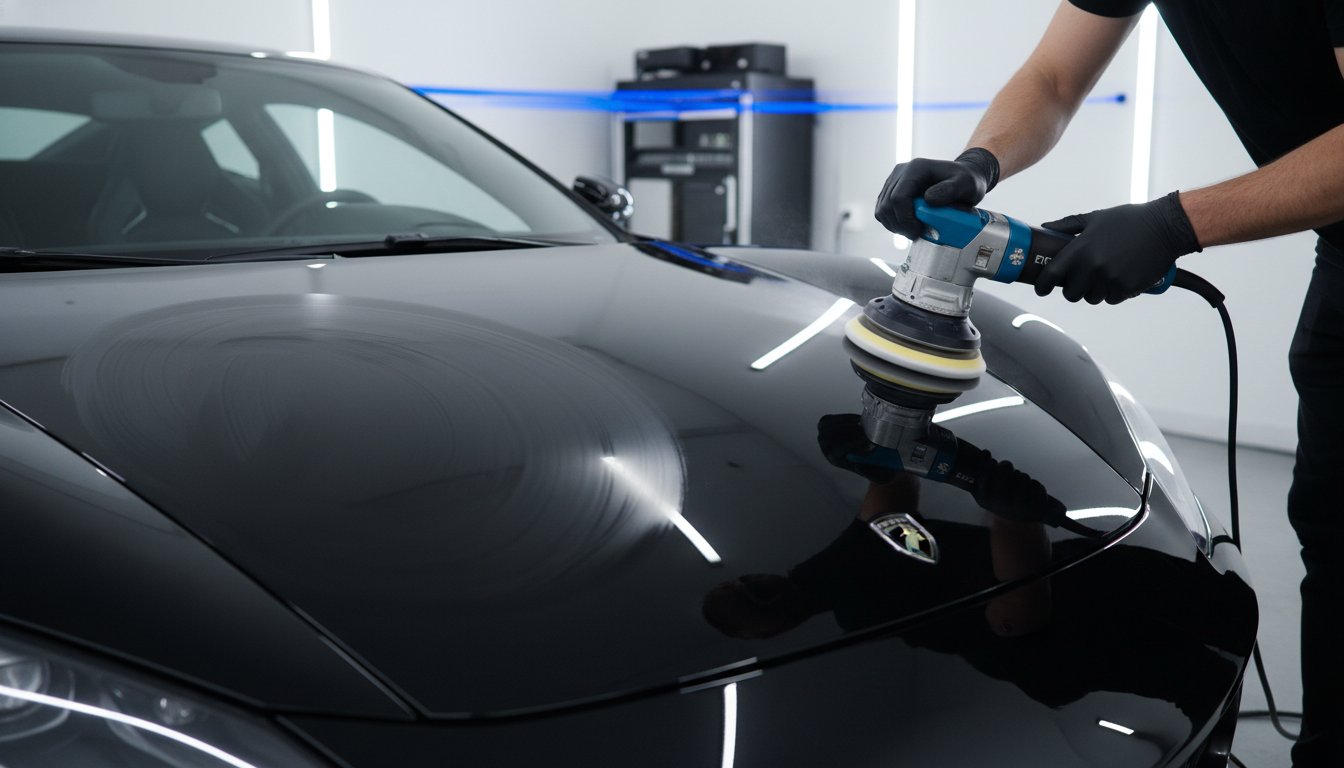
The Foundation of Gloss: Why Paint Correction Before Ceramic Coating is Essential in 2026
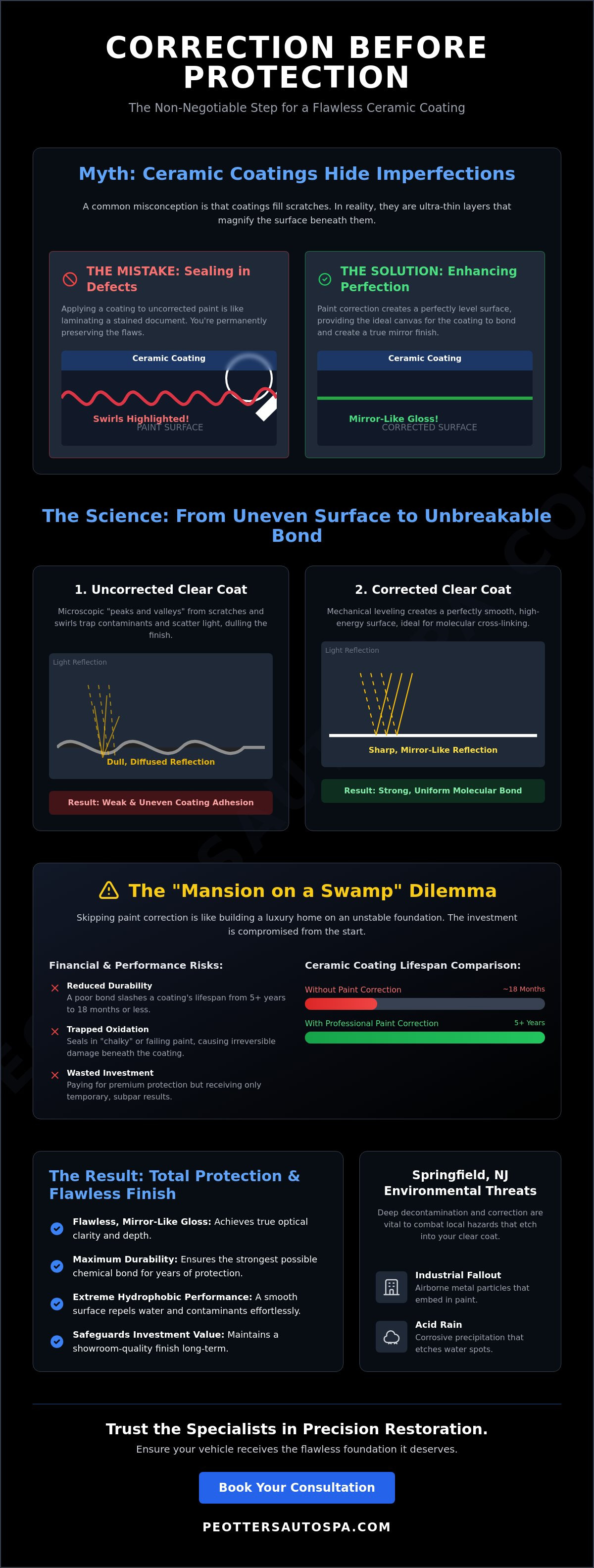
What if the most advanced ceramic coating in the world actually highlighted every flaw on your vehicle rather than hiding them? It's a common misconception that these liquid glass shields act as a filler for surface defects. In reality, applying a professional-grade sealant over swirl marks or light scratches is the equivalent of laminating a stained document; you aren't fixing the problem, you're merely preserving it. This is why performing a meticulous paint correction before ceramic coating is a functional requirement for chemical adhesion, not just a cosmetic luxury.
We understand the anxiety that comes with choosing the right level of service, especially when you're concerned about preserving your factory clear coat or navigating multi-stage pricing. You want a showroom-quality finish that delivers maximum hydrophobic performance for years to come. In this guide, we'll explain how proper surface leveling creates the perfect foundation for a lasting, elite bond. You'll learn how to achieve that deep, mirror-like gloss while ensuring your vehicle's long-term protection is handled by specialists who value precision and craftsmanship above all else.
Key Takeaways
- Understand how mechanical leveling of the clear coat transforms a surface from merely "clean" to "corrected," ensuring a superior chemical bond for your coating.
- Discover why applying a ceramic coating without proper preparation acts as a magnifying glass, permanently sealing in and highlighting existing swirl marks and defects.
- Explore why professional paint correction before ceramic coating is the non-negotiable step required to achieve a flawless, mirror-like finish that lasts for years.
- Identify the specific environmental threats in Springfield, NJ, such as industrial fallout and acid rain, that necessitate deep decontamination to preserve your vehicle's paint.
- Learn how the integration of precision restoration and elite coating creates a "Total Protection" result that safeguards your vehicle's long-term investment value.
The Science of Surface Preparation: Beyond Visual Clarity
The visual brilliance of a luxury vehicle is rarely found in the pigment itself, but rather in the clarity of the clear coat protecting it. Modern car paints are engineered for depth and resilience; however, they remain susceptible to the microscopic abrasions of daily life. Achieving a true showroom finish requires more than a standard wash. It demands a fundamental shift in surface geometry. While a "clean" car is free of loose debris, a "corrected" car has been restored to a perfectly level state through mechanical refinement. This leveling process is the only way to eliminate the light-scattering defects that dull a vehicle’s appearance and compromise its value.
Performing professional paint correction before ceramic coating ensures that the surface is chemically receptive. This preparation is not merely about aesthetics; it's about surface energy. A rough, uncorrected surface is covered in microscopic "peaks and valleys" that trap air and contaminants. By leveling these imperfections, we create a high-energy, smooth surface that allows the coating to bond with absolute uniformity. This precision leads to a more durable shield, a more intense reflection, and a significantly longer lifespan for the protection itself.
What is Paint Correction in a Professional Context?
True surface restoration is a labor of precision that separates the enthusiast from the master craftsman. Standard detailing often masks problems with temporary fillers or heavy waxes, but professional paint correction utilizes advanced abrasive compounds to physically level the clear coat. By removing the microscopic edges of scratches and swirl marks, we create a surface that is optically clear and physically smooth. This meticulous approach ensures that light hits the paint and reflects directly back, producing a mirror-like finish that defines automotive excellence. If you're interested in the technical nuances of this process, our what is paint correction guide explores the specific terminology and stages involved in professional restoration.
The Molecular Bond: Why Texture Matters
The relationship between a ceramic coating and your vehicle is chemical, not just physical. These advanced liquids are designed to cross-link with the clear coat, forming a permanent, glass-like shield that resists environmental damage. For this bond to reach its maximum potential, the surface must be free of any interference. When we perform paint correction before ceramic coating, we're optimizing the surface for molecular adhesion. A smooth, leveled surface allows the coating to "interlock" with the paint. Without this critical preparation, microscopic contaminants and jagged texture prevent the coating from anchoring properly. This results in a resilient finish, a deeper gloss, and a lifetime of easier maintenance for the discerning owner.
The Risks of Skipping Correction: The "Mansion on a Swamp" Dilemma
Many vehicle owners look at a brand-new car and assume the finish is flawless. It's a common trap. In reality, factory paint often arrives with transport scratches, buffer trails, or industrial fallout. Deciding to skip paint correction before ceramic coating because the paint seems "good enough" is a significant gamble. It's the automotive equivalent of building a multimillion-dollar mansion on a swamp. No matter how beautiful the structure is, the foundation will eventually fail. When you ignore the underlying defects, you aren't just saving time; you're compromising the integrity of your entire investment.
The financial risk of this shortcut is substantial. A premium ceramic coating is often marketed with a five-year lifespan, but poor surface preparation can slash that durability to eighteen months or less. Without mechanical leveling, the coating cannot form the permanent bond described in previous sections. You end up paying for elite protection while receiving a temporary result. Furthermore, sealing in oxidation is a silent killer for automotive finishes. If the paint has already begun to degrade or "chalk," applying a coating without correcting it first traps that chemical reaction. The paint continues to fail beneath the shield, leading to a dull, hazy appearance that no amount of washing can fix.
The Magnification Effect of Ceramic Coatings
A professional ceramic coating is a high-solids, transparent layer of liquid glass. It doesn't function like a traditional wax that fills in gaps or hides imperfections. Instead, it acts as a permanent magnifying glass. If you apply a coating over swirl marks, those "spider-web" defects will actually appear deeper and more defined. The high-gloss finish increases the light's intensity as it hits the paint, making every uncorrected scratch stand out with painful clarity. The psychological frustration of seeing a permanent flaw locked behind a glass shield is a burden no enthusiast should carry. Ensuring your vehicle undergoes a premium ceramic coating protocol is the only way to avoid this visual disappointment.
Premature Coating Failure and Delamination
For a coating to succeed, it must have direct access to the clear coat. Residual oils, transport waxes, and microscopic contaminants act as a physical barrier. When these aren't removed through the correction process, the coating is essentially "floating" on a layer of debris. This leads to delamination, where the coating begins to flake or peel away in patches. Once a coating fails in this manner, the only solution is to strip the entire vehicle and start over. The cost of stripping a failed application is far higher than the initial investment in proper preparation. Choosing paint correction before ceramic coating protects your wallet just as much as it protects your paint.
The Multi-Stage Correction Process: A Professional How-To
The transformation of a vehicle’s finish is not a single event. It's a series of deliberate, technical interventions designed to restore optical purity. While many believe a simple wash is sufficient, the professional standard requires a much deeper level of intervention. Executing a meticulous paint correction before ceramic coating ensures that the final result isn't just shiny, but flawless at a molecular level. This methodical approach is what separates a standard detail from a true automotive restoration. Every step is engineered to prepare the surface for a bond that lasts years, not months.
Our final inspection is the hallmark of our white-glove service. We utilize specialized, high-intensity lighting systems to mimic different sun angles and identify even the faintest haze or hologram. This rigorous check ensures a flawless canvas before the protective layer is applied. By committing to this level of detail, we guarantee that the paint correction before ceramic coating delivers the transformative result you expect from elite specialists who view your vehicle as a significant investment.
Step 1: Chemical and Mechanical Decontamination
Before a machine ever touches the paint, the surface must be surgically clean. We begin with a chemical decontamination using specialized iron removers. These agents dissolve metallic fallout that has embedded itself into the clear coat, often invisible to the naked eye. Next, a mechanical clay bar treatment lifts any remaining above-surface contaminants, such as tree sap or road tar. Finally, we use a dedicated stripping agent to remove old waxes and silicones. This leaves the paint in a "naked" state, ready for the actual restoration to begin. Without this deep clean, any remaining grit would be ground into the paint during the polishing stages.
Step 2: The Leveling and Refining Phases
The leveling stage is where the master craftsman’s skill becomes visible. Using precision compounding, we carefully remove the "peaks" of scratches, water spots, and heavy swirl marks. This process levels the clear coat to a uniform height, restoring the paint's original clarity and depth. Once leveled, we move to the refining stage. Using jeweler-grade polishes and soft foam pads, we burnish the surface to achieve a deep, mirror-like depth. For those seeking the absolute pinnacle of finish, a multi stage paint correction is considered the gold standard for luxury and performance vehicles. This ensures every square inch of the vehicle reflects light with perfect uniformity and brilliance.
Evaluating Your Vehicle: Springfield, NJ Environmental Factors
Driving in Northern New Jersey is an endurance test for any automotive finish. The high density of Union County brings unique atmospheric challenges that most generic detailing guides simply don't account for. Whether you're commuting on Route 22 or navigating the Garden State Parkway, your vehicle is constantly bombarded by a cocktail of industrial pollutants and road debris. Because of these aggressive local factors, performing a meticulous paint correction before ceramic coating isn't just a recommendation; it's a requirement for anyone who views their car as a significant investment. Without this step, you're merely sealing in the environmental damage unique to our region.
The chemistry of New Jersey's roads is particularly harsh. Road salt and liquid brine, used extensively during our winter months, don't just sit on the surface. They create microscopic pitting in the clear coat, forming tiny craters where moisture and contaminants can hide. If a coating is applied over these pits, the salt's corrosive nature can continue to work beneath the shield, leading to premature failure. Removing these defects requires a specialist's touch to ensure the foundation is as stable as it is beautiful.
The "New Car" Misconception
It's a common belief that a vehicle fresh from the showroom floor is in peak condition. This is rarely the case. Even 2026 models often arrive at the dealership with a history of environmental exposure. During transport from the factory, vehicles spend weeks on rail cars and open trailers, collecting "rail dust"—tiny metallic particles that embed themselves into the clear coat. To make matters worse, many dealerships use high-volume, aggressive wash bays that introduce "spider-web" scratches before the first owner even takes delivery. A single-stage correction is almost always necessary to remove these shipping scars and create a truly pristine surface.
NJ Environmental Stressors: Salt, Brine, and Acid Rain
Springfield's climate contributes to rapid clear coat oxidation if left unprotected. Our proximity to industrial hubs means your paint is frequently subjected to acid rain and chemical fallout that etches into the finish. We often see vehicles parked near transit hubs that have significant "rail dust" accumulation, which requires a combination of chemical decontamination and mechanical leveling to resolve. We tailor the correction level to your vehicle's specific storage history and usage. If you're ready to safeguard your investment against the harsh New Jersey climate, we invite you to schedule our professional paint correction and ceramic coating services to ensure your vehicle remains in showroom condition for years to come.
The Peotter’s Standard: Precision Restoration in Springfield
At Peotter’s Auto Spa, we recognize that our clients in Springfield and the surrounding Union County area view their vehicles as more than just transportation. They are significant assets that deserve a level of care matching their prestige. Our "Total Protection" philosophy isn't a marketing slogan; it's a commitment to integrating every stage of restoration into a seamless result. By combining expert surface refinement with elite protection, we ensure that the final finish is both breathtaking and resilient. Our boutique environment allows us to focus on quality over volume, ensuring that every vehicle leaves our studio in a state of perfection.
The long-term value of a correctly prepared finish extends far beyond the immediate gloss. When it comes time to trade or sell an exotic or luxury vehicle, the condition of the paint is often the primary factor in determining its market position. A surface that has been professionally restored and protected maintains its "newness" for years, which can significantly bolster resale value. Choosing paint correction before ceramic coating is a strategic move for any owner who values the equity in their vehicle. It ensures that the coating bonds perfectly, preventing the peeling or hazing that can occur with inferior preparation.
Our Boutique Approach to Surface Preservation
We don't believe in one-size-fits-all solutions. Our technicians treat every hood, fender, and trunk lid as a unique canvas with its own history. We utilize ultrasonic paint depth gauges to measure the exact thickness of your clear coat before any abrasive touches the surface. This data-driven approach prevents over-thinning and ensures that the structural integrity of your paint remains intact. It’s this meticulous attention to detail that defines our white-glove service. For those who demand the absolute peak of automotive defense, our ppf and ceramic coating package nj provides a comprehensive shield that addresses both impact resistance and chemical protection.
Securing Your Investment
The decision to invest in professional paint correction before ceramic coating is ultimately an investment in the vehicle’s future. By removing defects rather than hiding them, we create a finish that remains stable and vibrant for the life of the coating. We invite you to experience the difference that true craftsmanship makes. Your vehicle deserves a guardian that is as invested in its perfection as you are. Schedule your precision paint assessment at Peotter’s Auto Spa today and let us create a customized preservation plan for your investment.
Secure the Future of Your Automotive Investment
Choosing the right protection for your vehicle is a commitment to its long-term value and visual brilliance. Achieving a true mirror-like finish requires more than just high-end products; it requires a surgically clean and level foundation. By prioritizing paint correction before ceramic coating, you ensure that your investment is shielded by a bond that is chemically secure and optically flawless. This process transforms your vehicle into a preserved masterpiece, capable of withstanding the harsh road salts and industrial fallout unique to the Springfield area.
Peotter’s Auto Spa has been family-owned since 1994, serving as Springfield’s premier boutique auto spa for the most discerning owners. We specialize in luxury and exotic vehicle preservation, treating every project with the meticulous care of a master craftsman. Our team is ready to help you navigate the nuances of surface restoration to achieve a result that exceeds your expectations. Request a Professional Paint Correction Consultation and discover the peace of mind that comes with elite-level craftsmanship. Your vehicle deserves a guardian that is as invested in its perfection as you are. We look forward to restoring the depth and clarity your car was meant to display.
Frequently Asked Questions
Can I apply a ceramic coating to a new car without paint correction?
Applying a coating to a factory-fresh vehicle without preparation is possible, but it often compromises the final result. New cars frequently arrive with transport-related defects, chemical fallout, or dealership wash-bay swirls. We recommend at least a single-stage refinement to ensure the surface is chemically receptive and optically clear. This creates the elite foundation necessary for the coating to perform with maximum durability and brilliance.
Will ceramic coating hide minor scratches or swirl marks?
Ceramic coatings act as a transparent magnifying glass rather than a filler for imperfections. Because these products are engineered for clarity and depth, they will actually highlight and lock in any existing surface defects. Performing paint correction before ceramic coating is the only way to ensure those "spider-web" swirls aren't permanently visible beneath the glass-like shield. It ensures a flawless, mirror-like finish that defines true automotive excellence.
Does paint correction remove too much clear coat from my car?
Professional surface restoration is a delicate, precise process that removes only a microscopic layer of the clear coat. We utilize ultrasonic paint depth gauges to monitor the surface thickness throughout the process, ensuring your vehicle's structural integrity remains intact. Our goal is to level the "peaks" of scratches while preserving as much of the original factory finish as possible. This meticulous approach maintains the long-term resilience and value of your investment.
How long does the combined process of correction and coating take?
A comprehensive preservation project typically requires two to four days to complete. This timeline accounts for the meticulous decontamination, the multi-stage leveling process, and the necessary curing time for the coating to bond. We prioritize precision and quality over speed, ensuring that every square inch of your vehicle receives the white-glove attention it deserves. This measured pace guarantees a result that is both stunning and durable.
Is a one-step polish enough before applying a 9H ceramic coating?
A single-stage polish is often sufficient for newer vehicles with minor imperfections or light haze. However, vehicles with deeper etchings, heavy swirls, or water spots require a multi-stage approach to achieve a flawless finish. The level of correction needed is determined by the specific condition of your paint and your desired aesthetic outcome. We tailor our approach to provide the most effective restoration for your vehicle's unique needs.
What happens if I skip paint correction and the coating fails?
Skipping the correction process often leads to delamination, where the coating begins to flake or peel away due to poor adhesion. When a coating fails prematurely, the entire layer must be mechanically polished off before a new application can begin. This results in higher long-term costs and unnecessary clear coat removal compared to doing the job correctly the first time. Choosing paint correction before ceramic coating protects your wallet and your paint's integrity.
How do I know if my car needs a multi-stage correction instead of a single-stage?
Determining the appropriate level of restoration requires a professional evaluation under specialized high-intensity lighting. If your paint displays deep scratches, heavy water spots, or significant oxidation, a multi-stage process is essential for total rejuvenation. A single-stage refinement is better suited for enhancing gloss and removing the light marring found on well-maintained or brand-new vehicles. We provide a consultative assessment to help you choose the most effective path for your car.